Reference · Astronomy
What are the twelve signs of the zodiac?
Kevin Blaxton — software builder; astrology student for 40+ years · figures computed by the OrbHeaven engine
Published · Last revised
The twelve signs of the zodiac are twelve equal thirty-degree slices of the ecliptic — the band of sky the Sun, Moon and planets travel through. Each is named for a constellation that sat behind it two thousand years ago, and the tradition gives each a style it lends to any planet placed in it. The signs are a human scheme laid on the sky, not the constellations themselves.
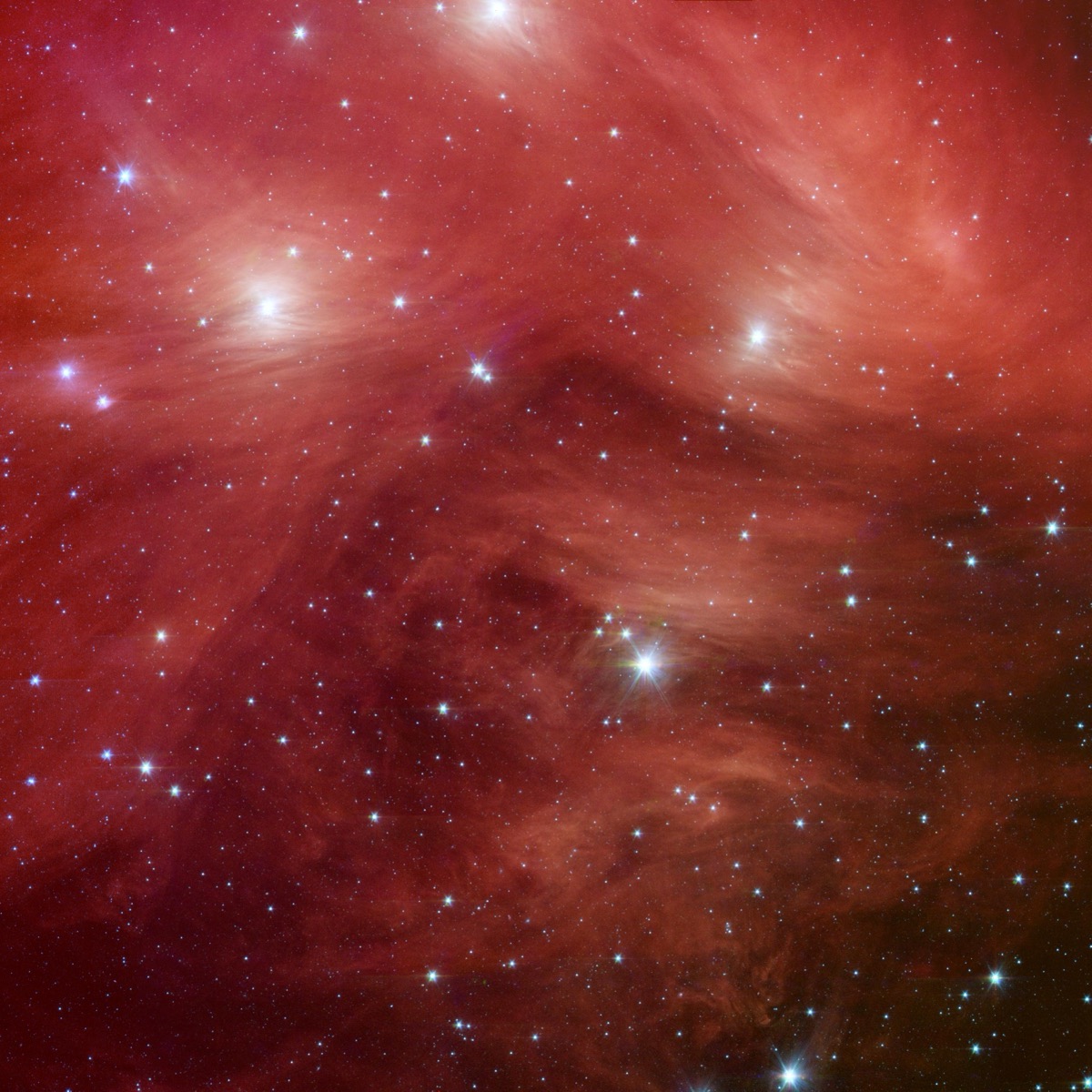
Source: NASA/JPL-Caltech · false colour · U.S. public domain (courtesy NASA; no endorsement implied).
What are the twelve signs?
They are twelve equal divisions of the ecliptic, 30° each, making 360° in all. In the tropical zodiac OrbHeaven uses, the first, Aries, begins at the March equinox, and the rest follow in order around the circle. Their evenness is the first thing that separates them from the constellations, which are of wildly unequal size.
A sign is a stretch of ecliptic longitude, nothing more — a coordinate band. Everything else about a sign is a layer of meaning the tradition adds.
Elements and modalities
The twelve are sorted two ways at once. The four elements — fire, earth, air, water — group them by temperament (fire acts, earth builds, air thinks, water feels), three signs to each. The three modalities — cardinal, fixed, mutable — group them by how they move (start, hold, adapt), four signs to each. Four elements times three modalities gives twelve unique combinations: one per sign.
The wheel above colours each sign by its element and marks its modality. This grid is the backbone of how the tradition reads the signs — but it is a classification laid on the coordinate band, not a fact about the stars.
How a sign is determined
Purely by arithmetic. The engine computes a body’s apparent ecliptic longitude, and the sign is simply which 30° slice that longitude falls in: 0–30° is Aries, 30–60° Taurus, and so on. Measured from the March equinox (tropical), it is the same for everyone and leaves no room for opinion.
So “what sign is my Mars in?” is a calculation, not a judgement; what that placement means is the interpretation that follows.
Signs are not the constellations
The signs were named for the constellations behind them, but the two have drifted apart. The Earth’s axis slowly wobbles — precession — moving the equinox point about a degree every 72 years, so the tropical signs have slid roughly a whole sign from their namesake constellations, which are themselves of unequal width (and the ecliptic even crosses a thirteenth, Ophiuchus).
This is why your Sun “sign” usually sits in front of a different constellation. The full treatment — tropical versus sidereal, and the widening gap — is in the tropical zodiac.
A short history
The twelve-fold zodiac of equal signs was standardised by Babylonian astronomers in the second half of the first millennium BCE, tidied out of older, uneven constellation lore into twelve equal parts for easier calculation. Greek astronomy inherited and formalised it, and the scheme has been recognisable ever since.
The elements and modalities, and the characters given to each sign, were layered on over the following centuries, drawing on Greek natural philosophy as much as on the sky.
What a sign means
Interpretation, labelled as such: a sign is read as the style of whatever planet sits in it — the same Mars pushes differently in Aries than in Pisces. The element and modality shade that style, and the Sun, Moon and rising signs are the three most people start with.
Where this is disputed
Whether to read the signs from the equinox (tropical) or the stars (sidereal) is a real, unresolved split between Western and Indian astrology, and how much a Sun sign alone can say is itself disputed. The 30° divisions and the positions are exact; the meanings are a tradition, and we keep them apart.
Common misconceptions
- Are the signs the same as the constellations?
- No. The signs are twelve equal 30° divisions measured from the equinox; the constellations are uneven star patterns the ecliptic crosses (thirteen of them). Precession has moved the two about a sign apart.
- Is my Sun sign my whole personality?
- The tradition treats a sign as the style of a planet in it; the Sun sign is one placement among many. The Moon and rising signs, and the rest of the chart, add much more.
- Why are the signs all exactly 30°?
- Because they are a deliberate even division of the 360° ecliptic — twelve parts for the roughly twelve lunar months in a year — not a map of the unequal constellations.
References & further reading
- [1] Rochberg, F., The Heavenly Writing — the Babylonian origins of the twelve-sign zodiac.
- [2] International Astronomical Union — the constellations and their boundaries (the ecliptic crosses thirteen).
- [3] Meeus, J., Astronomical Algorithms, 2nd ed. (Willmann-Bell, 1998) — precession and the equinox.
Suggested citation
Blaxton, K. (2026). What are the twelve signs of the zodiac. OrbHeaven Reference. https://orbheaven.com/reference/the-zodiac-signsRevision history
- First build. Original twelve-sign wheel (elements × modalities, standard groupings) plus the reused signs-vs-constellations diagram; cross-links the tropical-zodiac article for the full precession treatment (preserved, not duplicated). Imagery: NASA/JPL-Caltech Spitzer infrared Pleiades (U.S. public domain), labelled false-colour — the cluster in the constellation Taurus. No interactive (reuses figures).
Related glossary entries
About a minute. Birth time optional, and no account until after you have seen it.
More in the reference library
What is the tropical zodiac, and why are the signs not the constellations?
The tropical zodiac measures the signs from the March equinox, not from the stars — which is why, after millennia of precession, the signs no longer line up with their constellations. With engine-computed tropical/sidereal/constellation comparisons.
What is a birth chart, and how is one built?
A birth chart is a map of the sky at the moment and place you were born. This explains how one is assembled — the frame, the signs, the planets, the houses and aspects — reusing OrbHeaven’s engine, and where calculation ends and interpretation begins.
What are your Sun, Moon and rising signs — the “big three”?
The Sun, Moon and rising sign are the three placements most astrologers start with. This explains what each one is astronomically — the Sun’s apparent position, the Moon’s actual position, the geometric Ascendant — how much birth information each needs, and what the tradition reads into them.