Writing
What this is for, and the sky it runs on
20 pieces, in two halves. The first three are about what OrbHeaven does and what it refuses to claim. The other three are the astronomy underneath, stated plainly, including the parts most astrology sites would rather not mention.
What this is for
What the product does, who it helps, and what it refuses to claim.
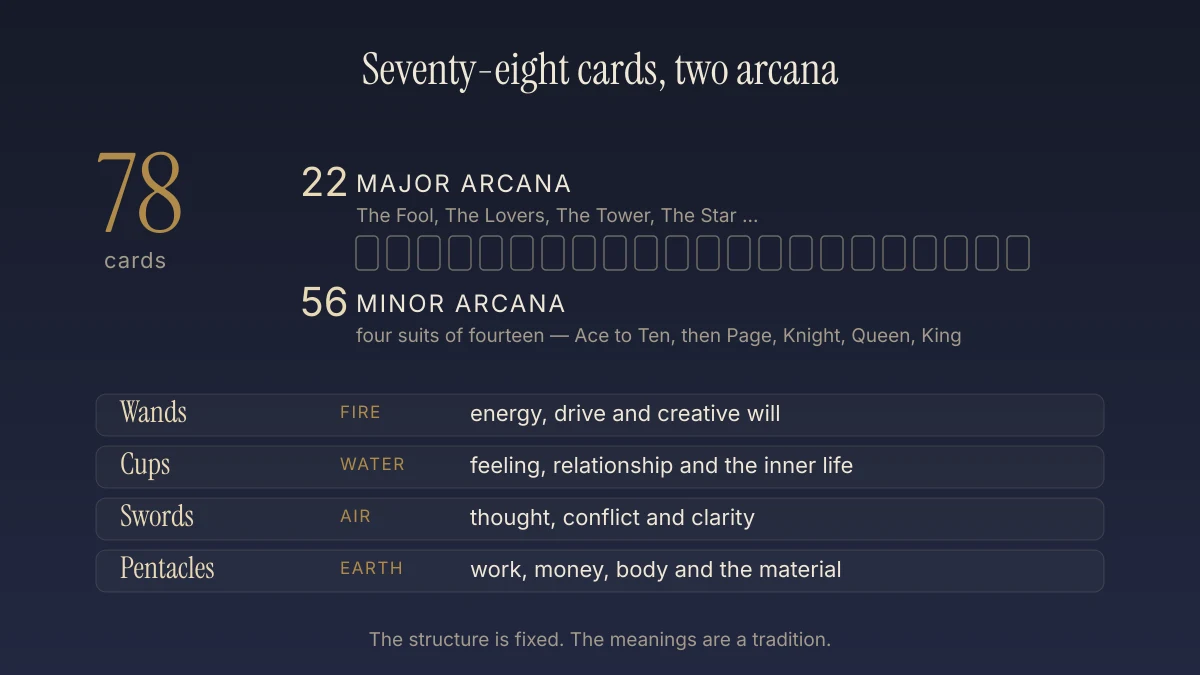
What do tarot cards mean, and how does a tarot reading work?
A tarot deck is seventy-eight cards: twenty-two Major Arcana and fifty-six Minor Arcana in four suits. Here is what the cards traditionally mean, how a reading and a spread are laid out, what upright and reversed stand for, and why tarot is best used for reflection rather than prediction.
9 min read
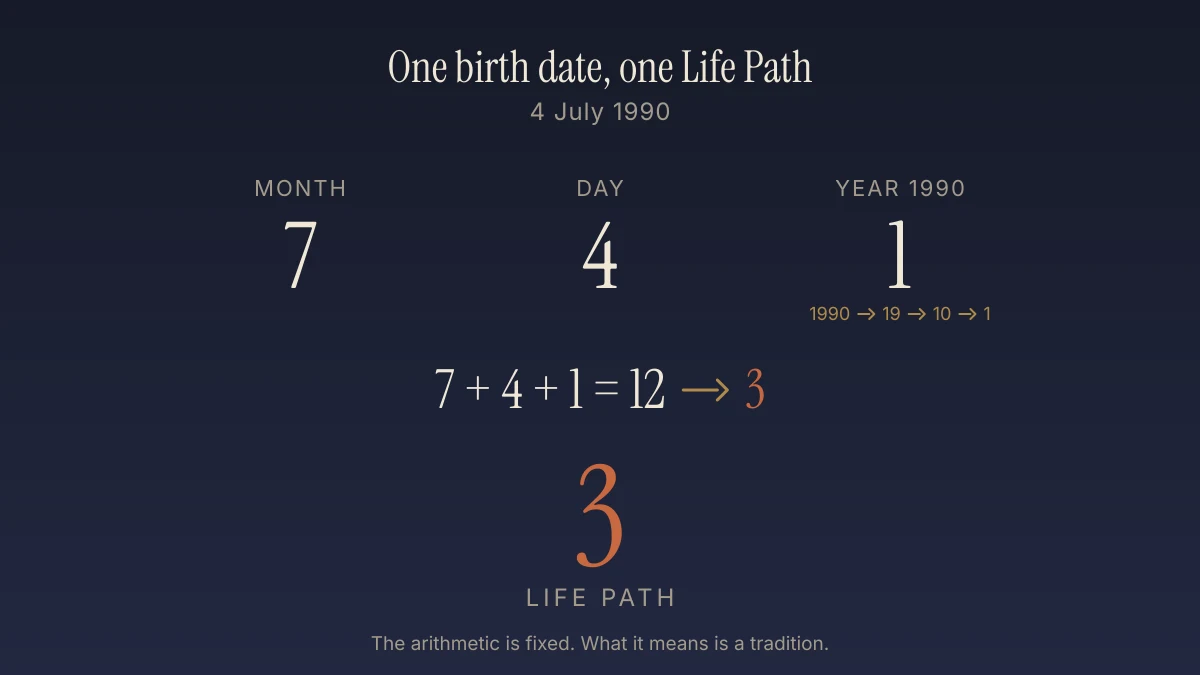
How do you calculate your Life Path number in numerology?
Your Life Path number reduces your birth date to a single digit, or to a master number 11, 22 or 33. Here is the Pythagorean method worked step by step, what the numbers 1 to 9 and the master numbers traditionally mean, where conventions differ, and the mistakes that quietly change the answer.
8 min read
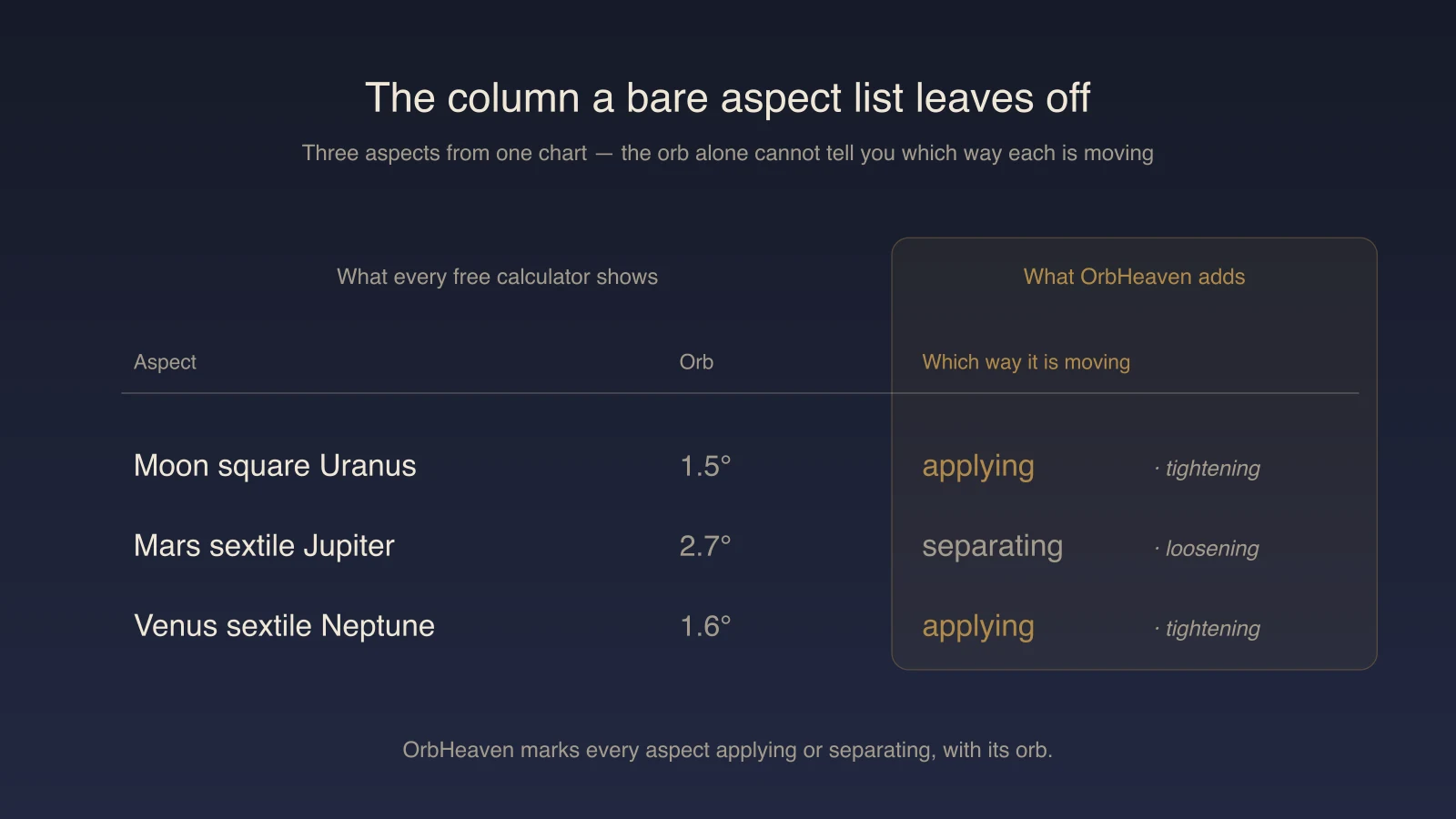
What are the best free astrology birth chart calculators?
A free birth chart calculator places the Sun, Moon and planets in signs, degrees and aspects. Here is what five free ones verifiably show, and how to choose.
9 min read
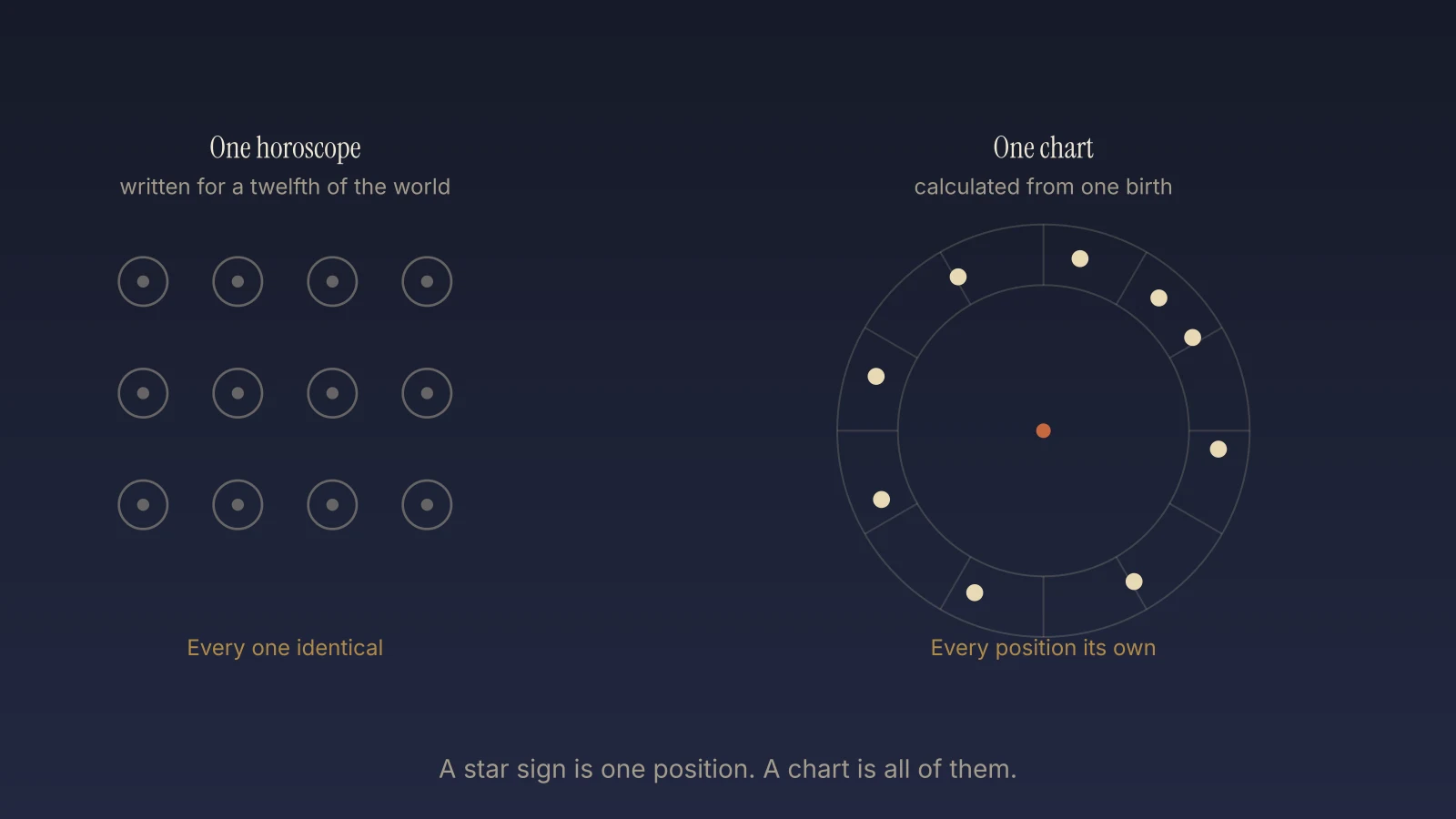
Why does every horoscope feel like it was written for someone else?
Because it was. A daily horoscope is written for a twelfth of the world at once. Here is what changes when a reading is calculated from your own birth details instead, and what honestly does not.
4 min read
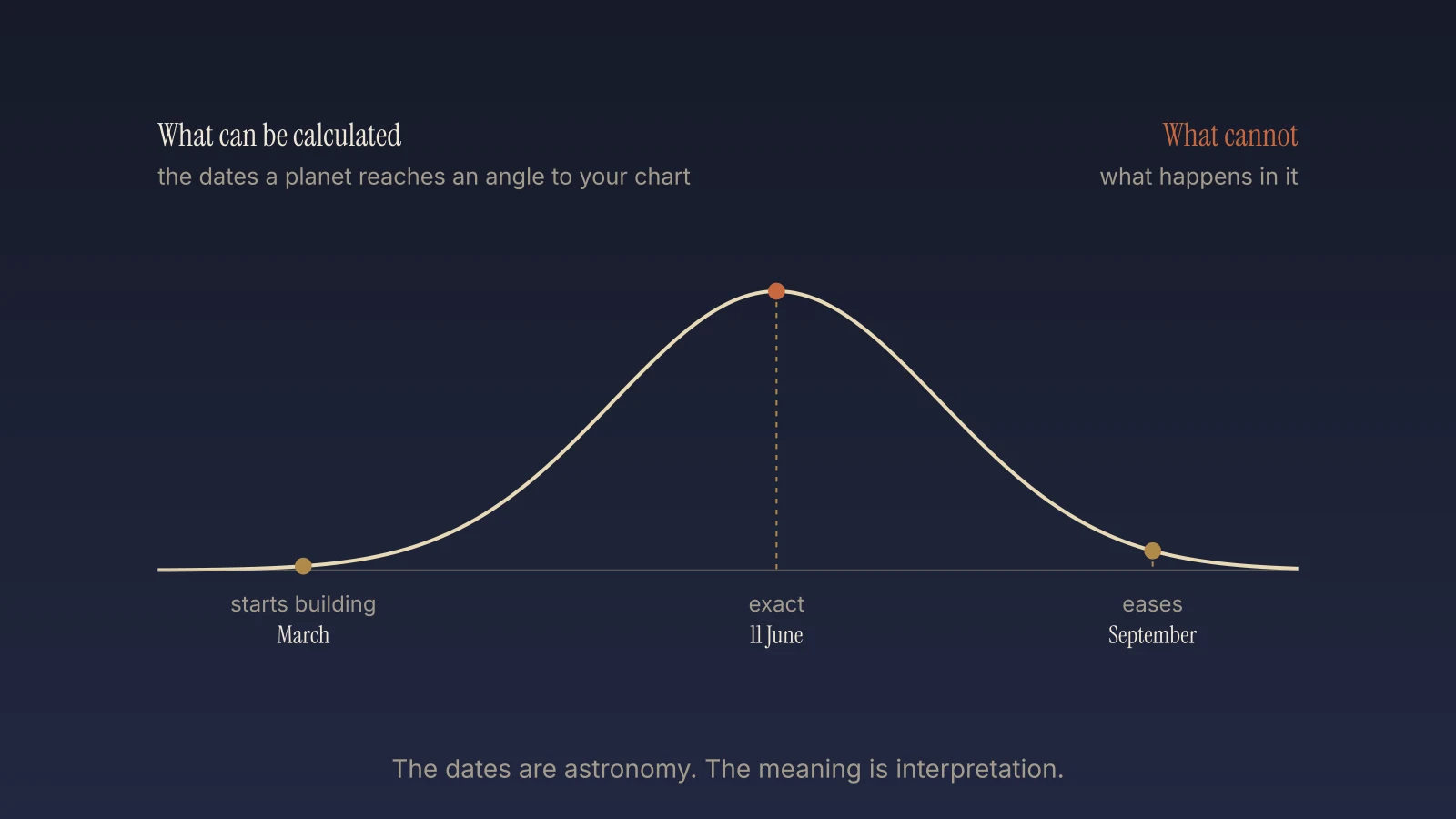
Can an app tell you when something is going to happen?
It can tell you exactly when a planet reaches an angle to your chart, to the day, years ahead. It cannot tell you what will happen. The gap between those two sentences is the whole honest case for using one.
5 min read
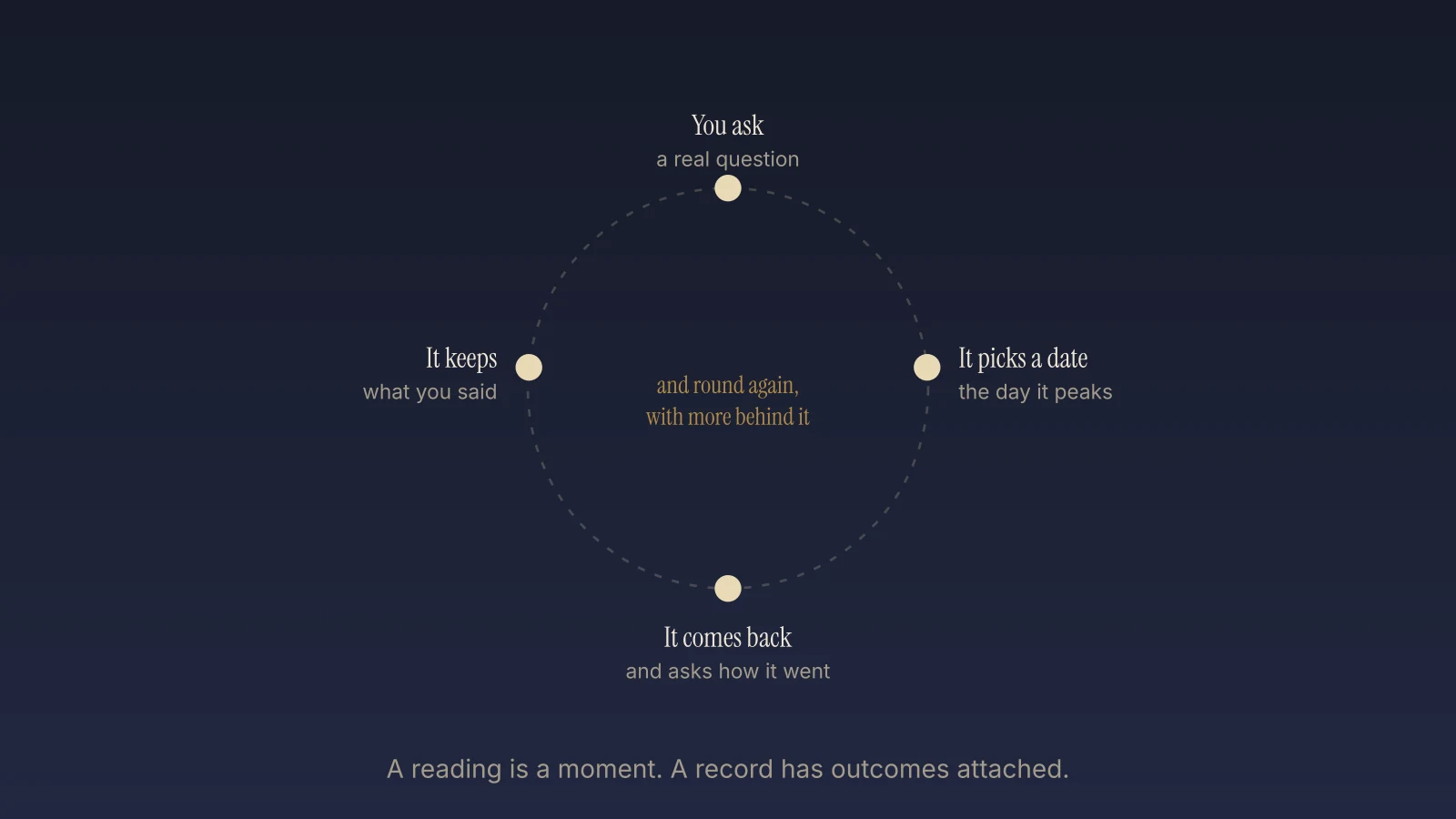
What changes if you write down what actually happened?
Almost every astrology app tells you something and never asks how it went. Keeping the answer turns a stream of readings into a record with outcomes attached — and a record is the only version of this that can tell you anything you did not already believe.
4 min read
The actual sky
The astronomy underneath, stated plainly, including the parts that are inconvenient.
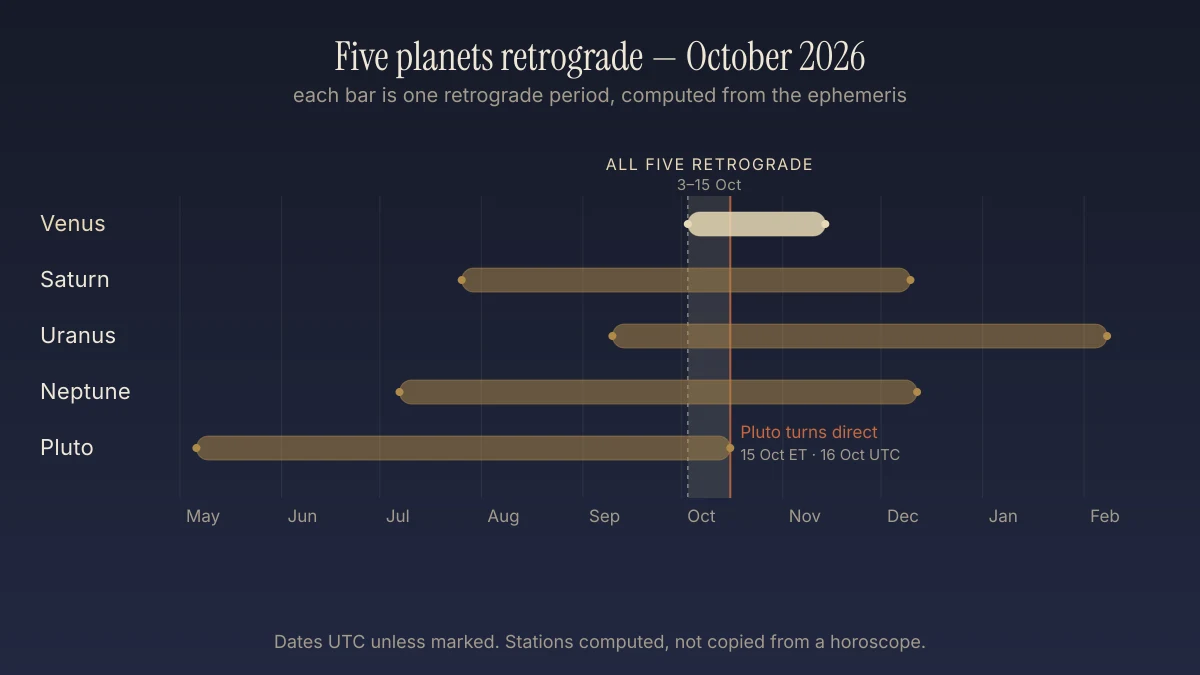
Which five planets are in retrograde in October 2026, and what does it mean?
Venus, Saturn, Uranus, Neptune and Pluto are all retrograde together from 3 October 2026 until Pluto turns direct late on 15 October (Eastern) / 16 October (UTC). Here is what retrograde actually means, why so many overlap, and what the tradition reads into it.
6 min read
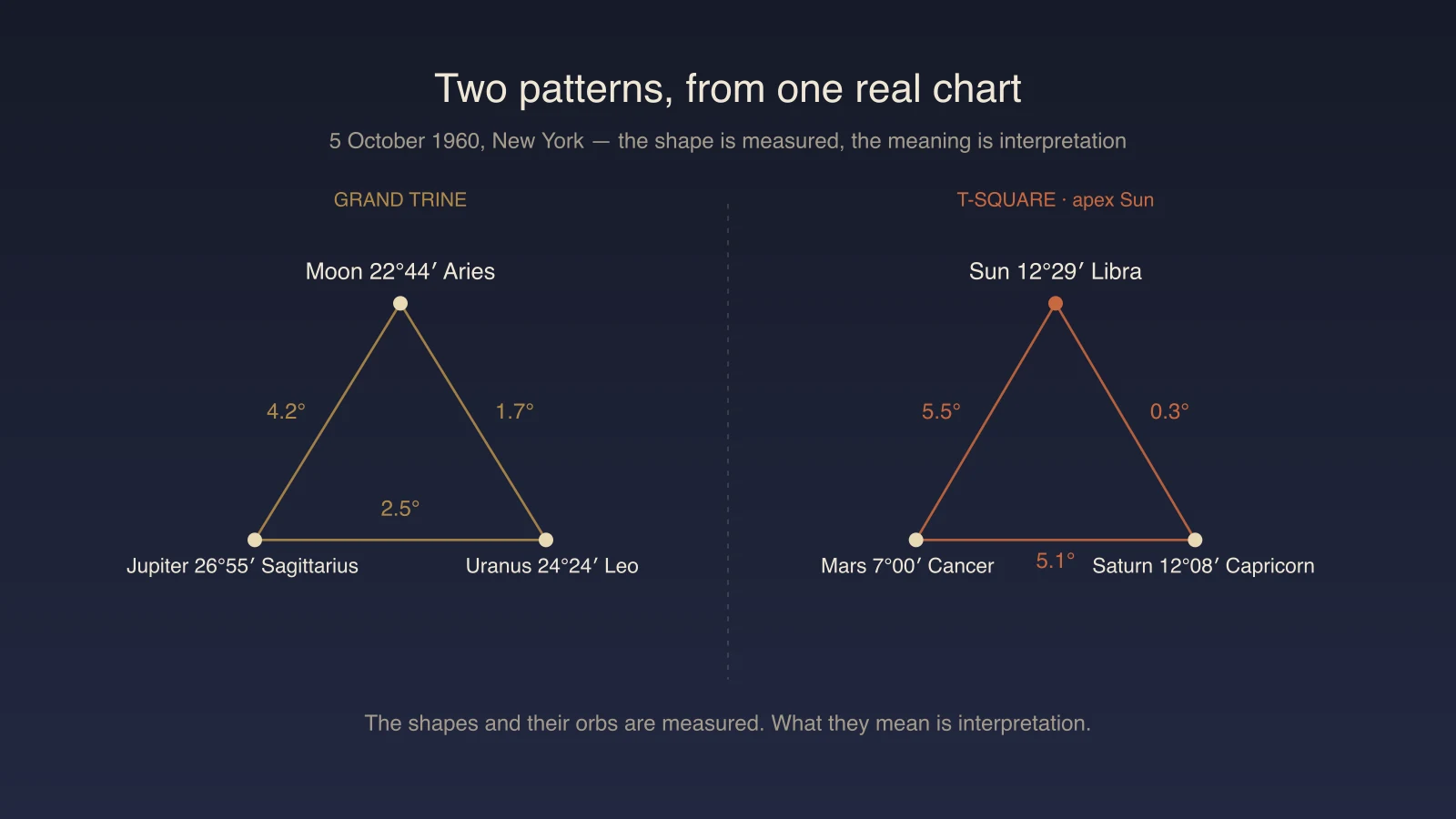
What are chart patterns in astrology?
A chart pattern is a shape several planets make — a grand trine, T-square, grand cross, yod or kite. Here is what each one is, drawn from a real chart.
7 min read
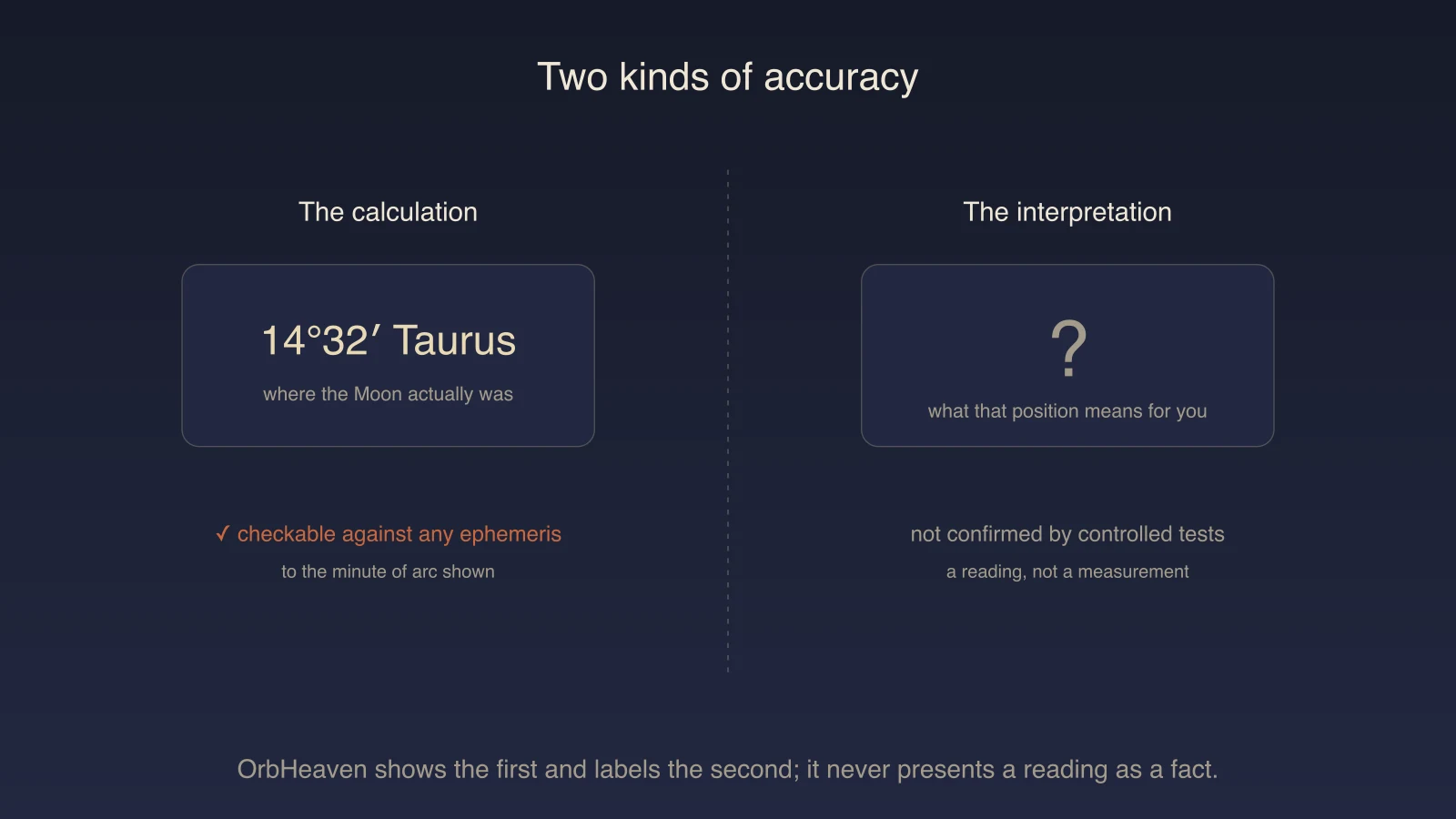
How accurate is an astrology birth chart?
Two different things get called a birth chart’s accuracy. The astronomy is accurate and checkable; whether its meaning is accurate is a separate, unproven question. Here is what is measured, what is read, and what makes a chart wrong.
6 min read
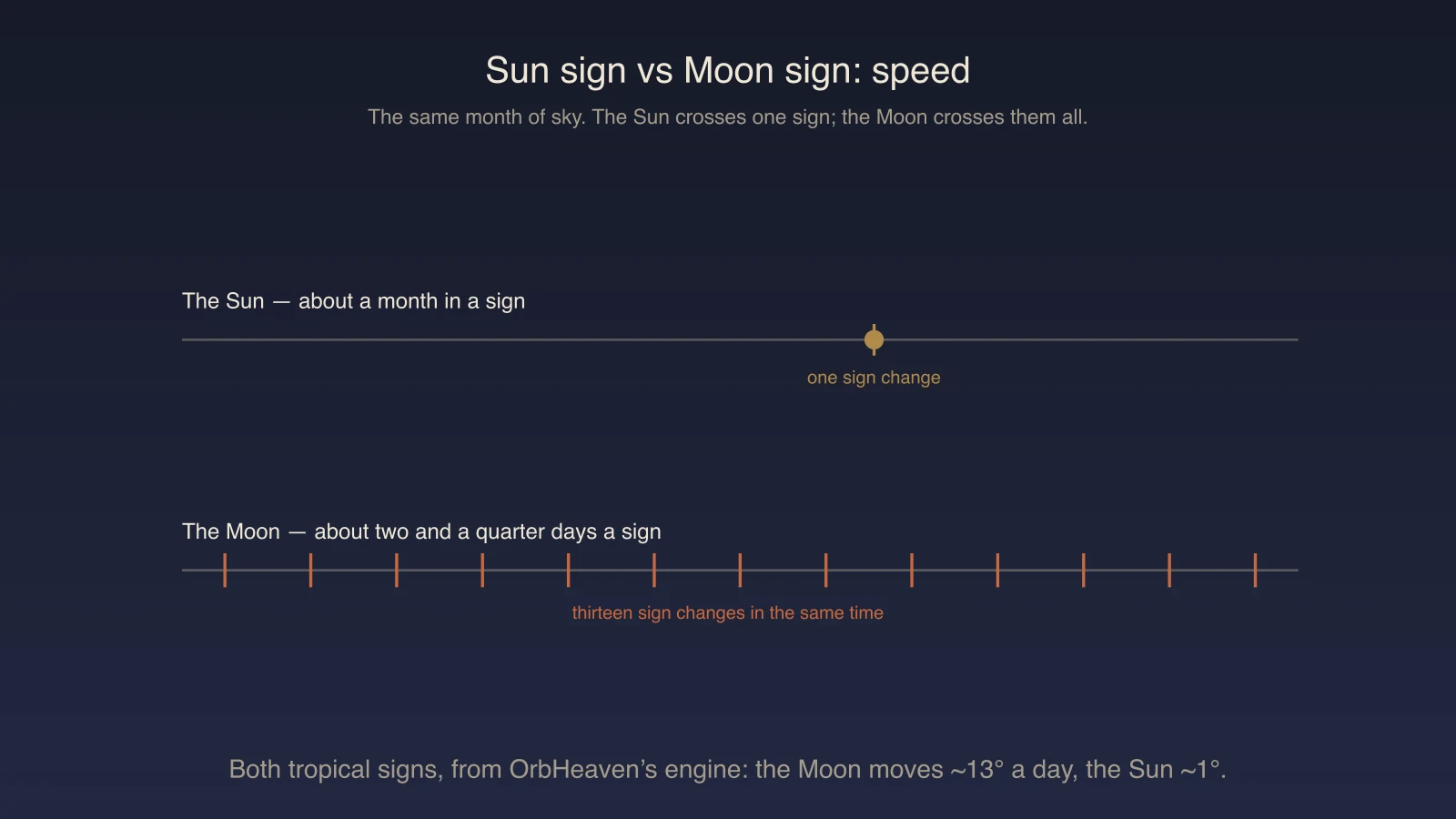
Moon sign vs Sun sign: what’s the difference?
Your Sun sign comes from your date; your Moon sign changes every couple of days, so it often needs your birth time. Here is the difference, why the Moon sign is harder to pin down, and why both are signs, not constellations.
6 min read
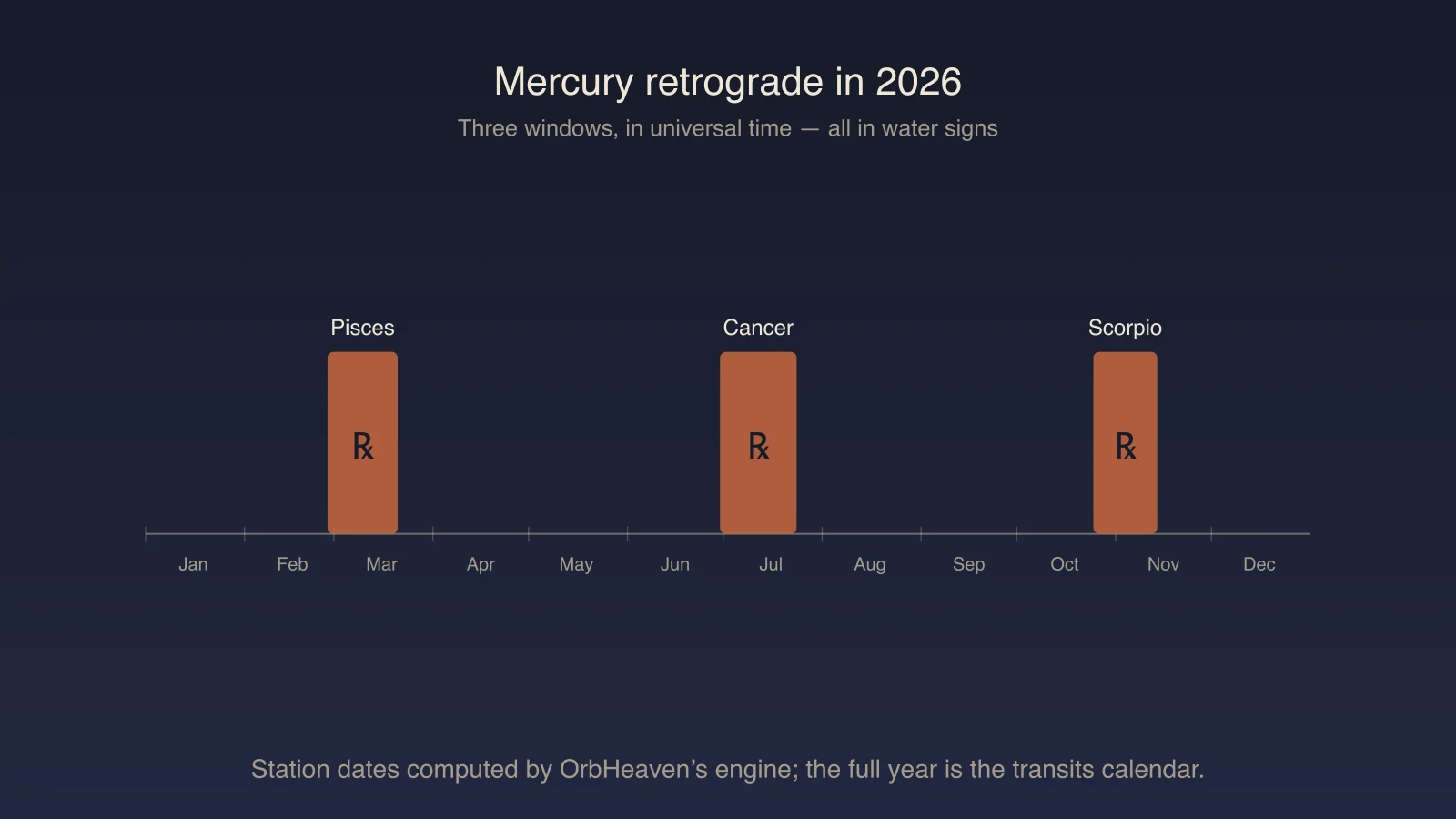
When is Mercury retrograde in 2026?
Mercury is retrograde three times in 2026 — in Pisces, Cancer and Scorpio. Here are the exact dates in UTC, from a published ephemeris, what retrograde actually is, and why its meaning is a separate, contested question.
6 min read
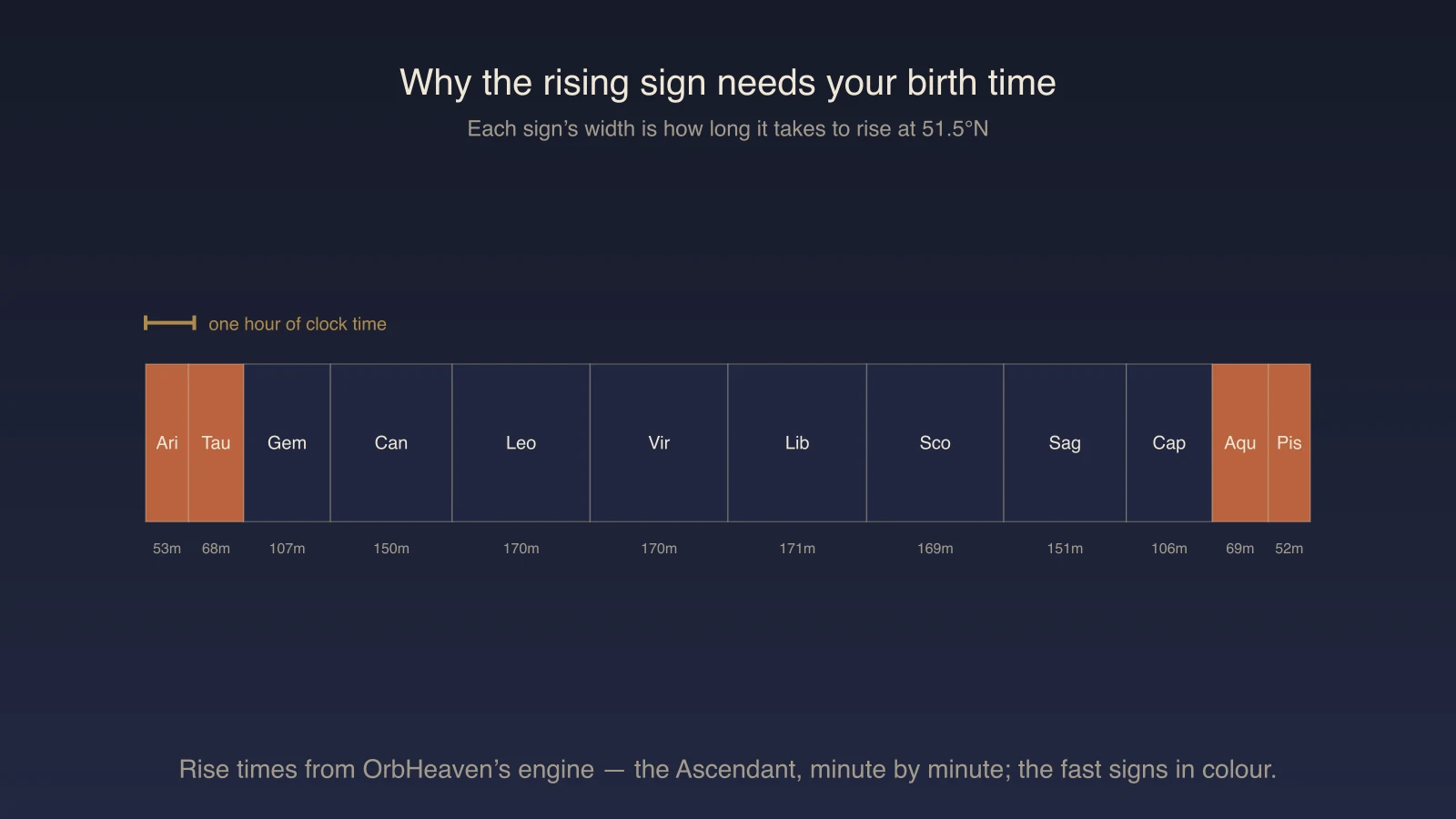
What is your rising sign, and why does birth time matter?
Your rising sign, or Ascendant, is the sign rising in the east at your birth — the one placement that needs your exact birth time. Here is what it is, why an hour can change it, and why OrbHeaven will not guess it without a time.
6 min read
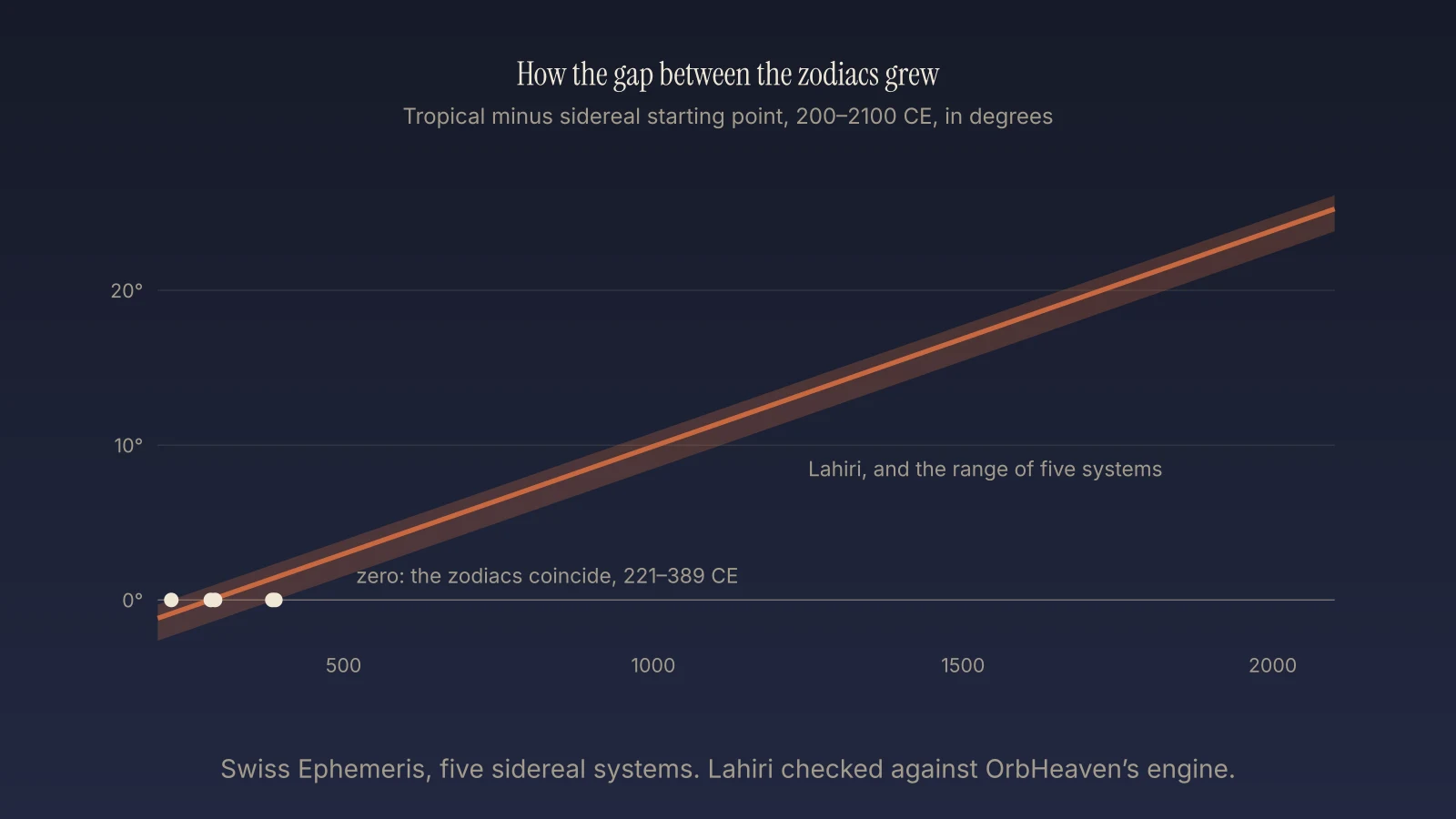
What is the difference between tropical and sidereal astrology?
What the tropical and sidereal zodiacs measure, why they now differ by about 22 to 25 degrees depending on the sidereal system, and why both use twelve equal signs, not the constellations.
7 min read
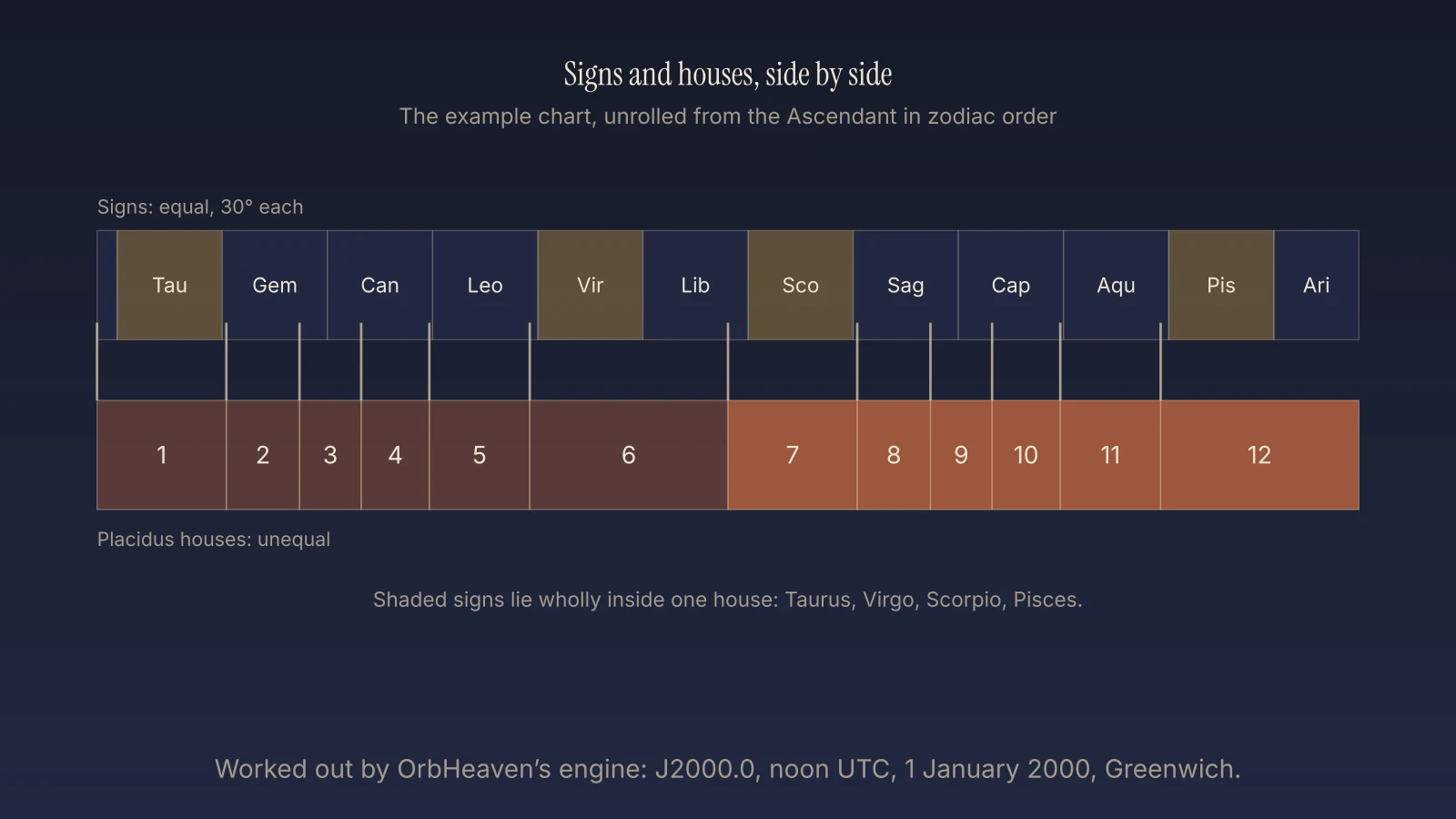
What do the 12 houses mean in a birth chart?
Learn what the 12 houses in astrology mean, how house cusps are calculated, why birth time matters, and what each house traditionally represents.
10 min read
Why do astrology calculators give different results?
Why two astrology calculators can give different charts for the same birth: house systems, zodiacs, the node, time zones, a missing birth time and orbs, each measured on one real example chart.
10 min read
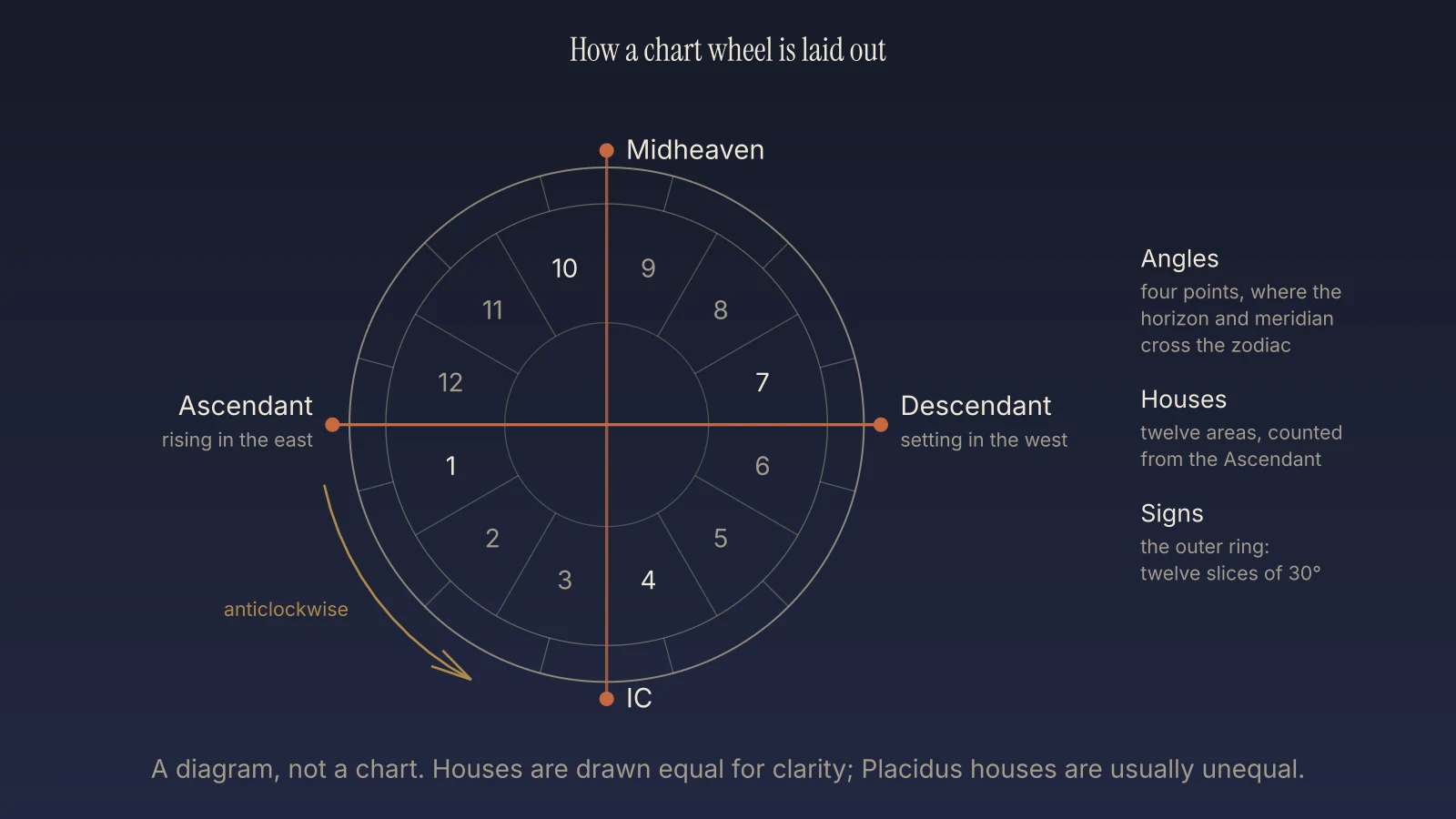
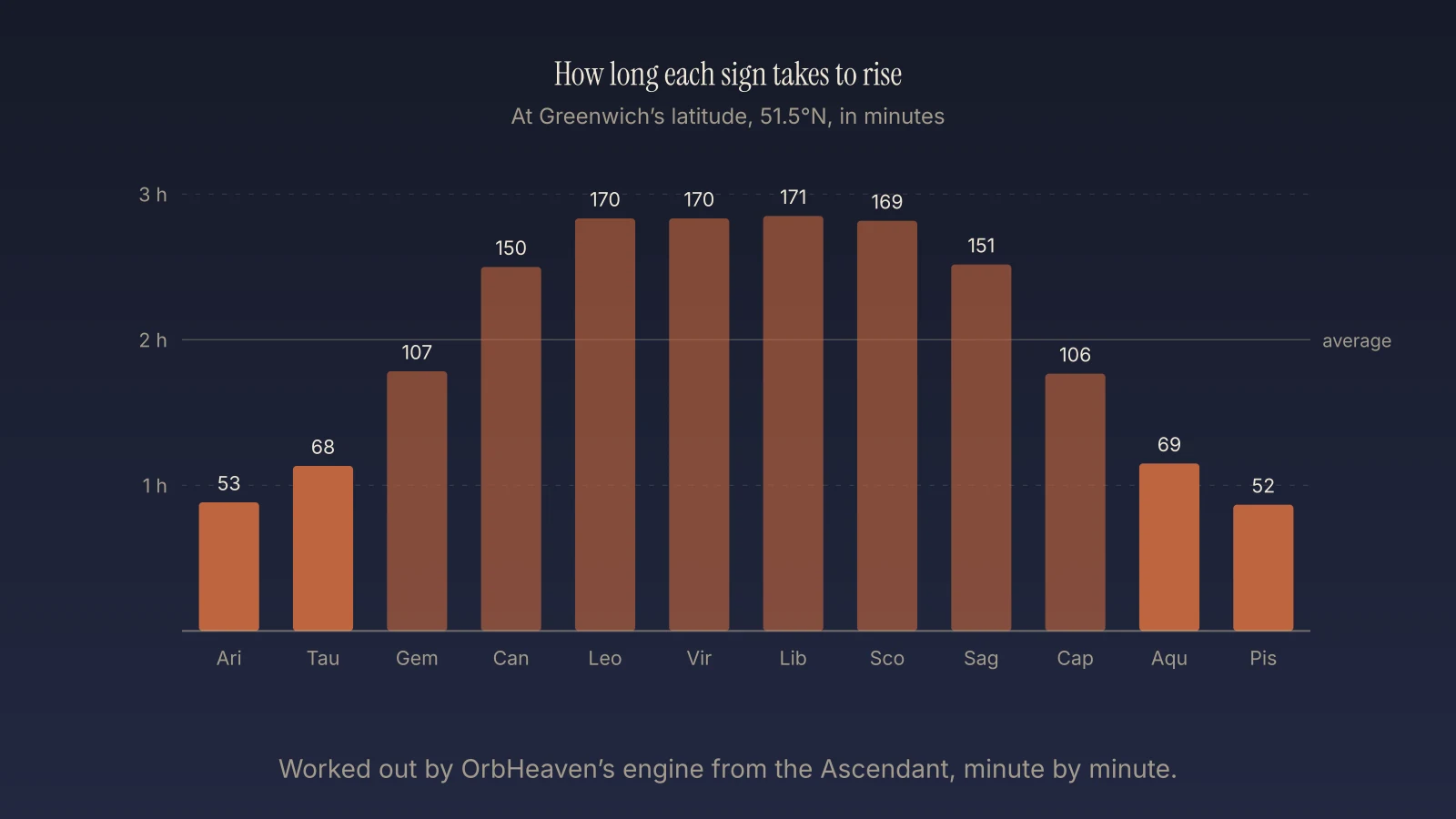
How do you read a birth chart?
A step-by-step guide to reading a birth chart: what is calculated, how the tradition reads it, and what changes without a birth time, worked through one real example chart.
12 min read
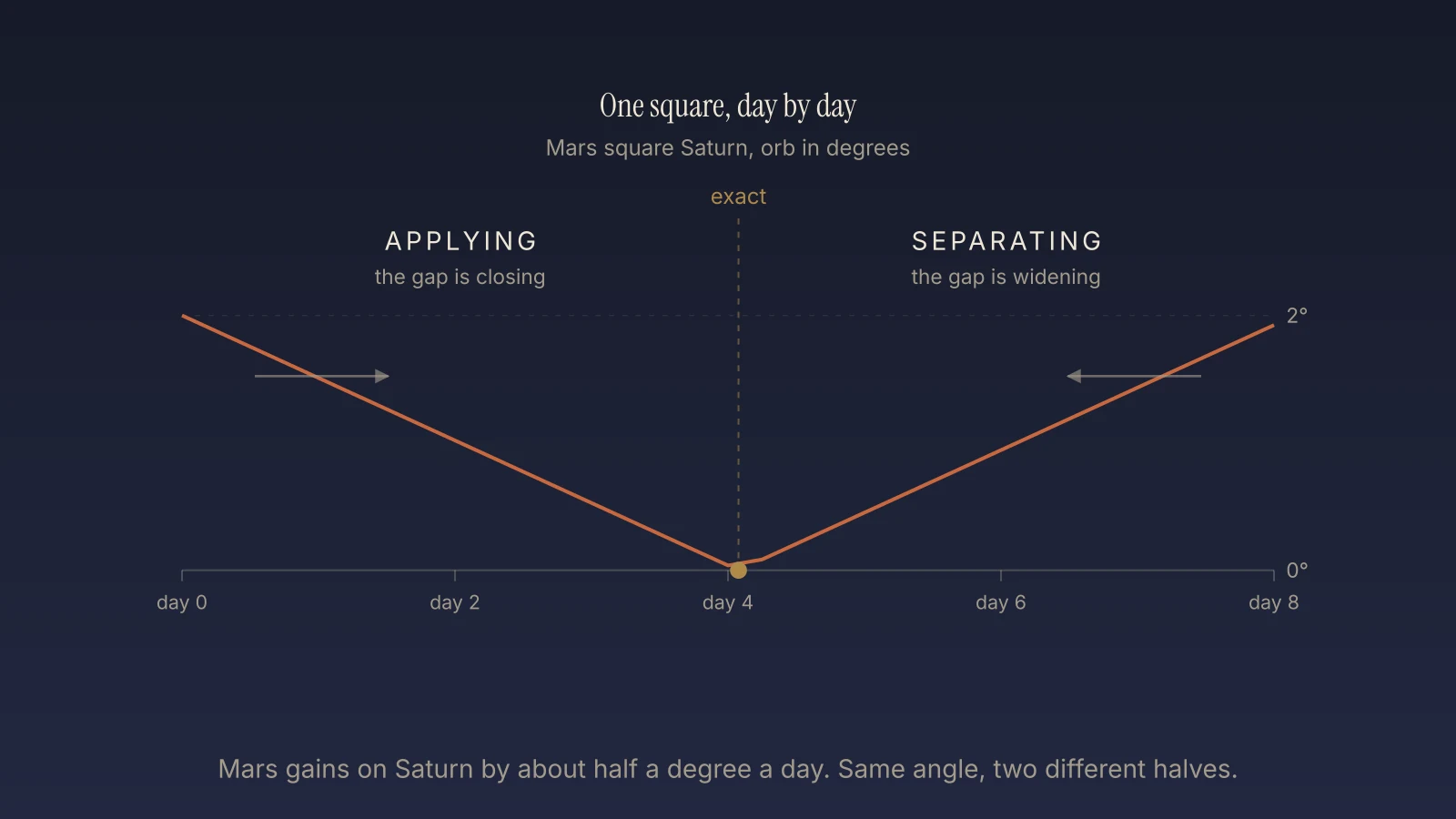
What is the difference between an applying and a separating aspect?
An applying aspect is still moving toward exact; a separating one has already passed it. Which is which is arithmetic rather than opinion, and it changes how the aspect is usually read. With a worked example you can check for yourself.
6 min read
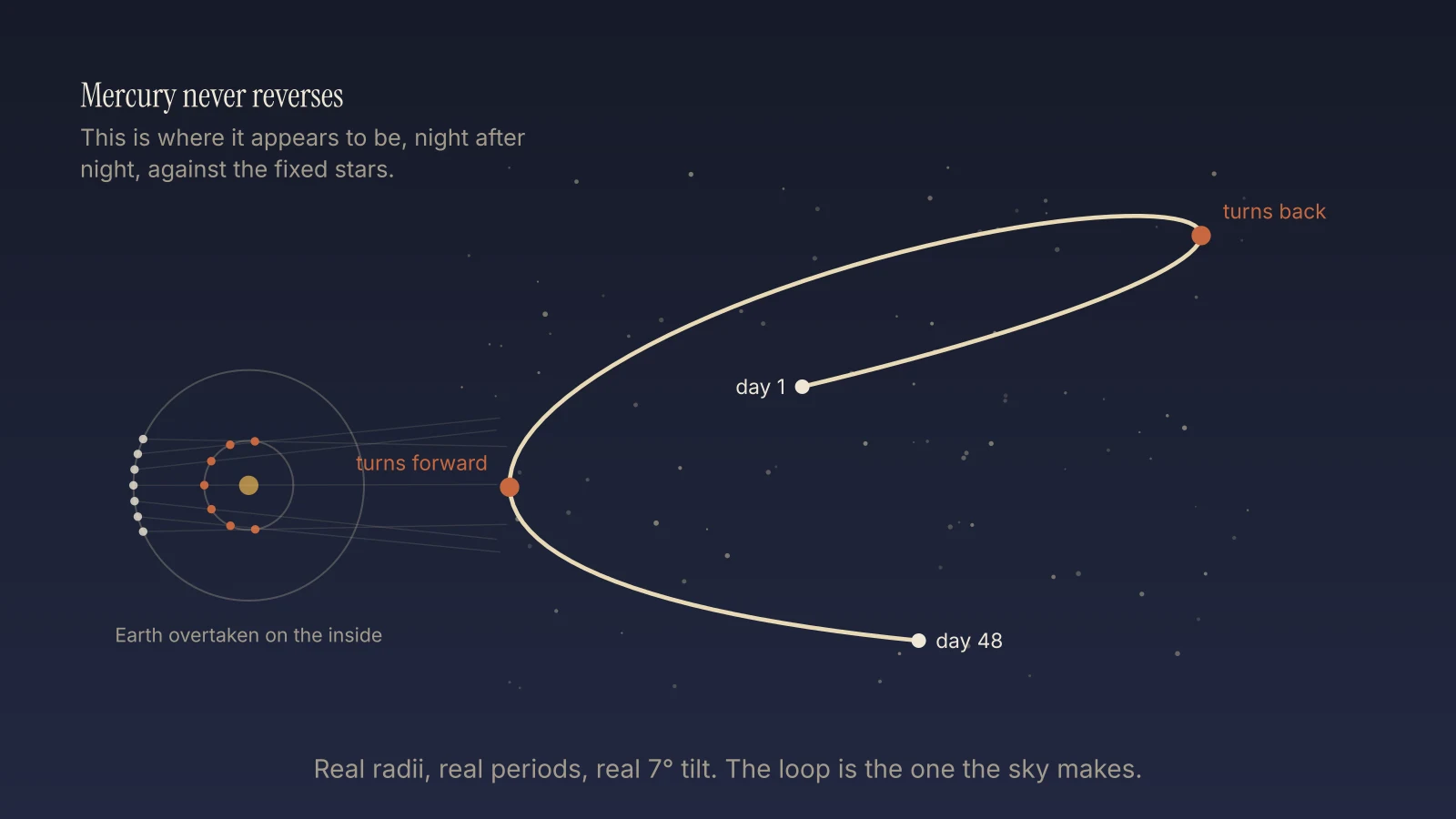
Does Mercury actually move backwards?
No. Nothing reverses. Mercury only appears to loop backwards against the stars because we are watching it from a planet that is itself moving — and knowing why makes the whole thing less mysterious and more interesting.
5 min read
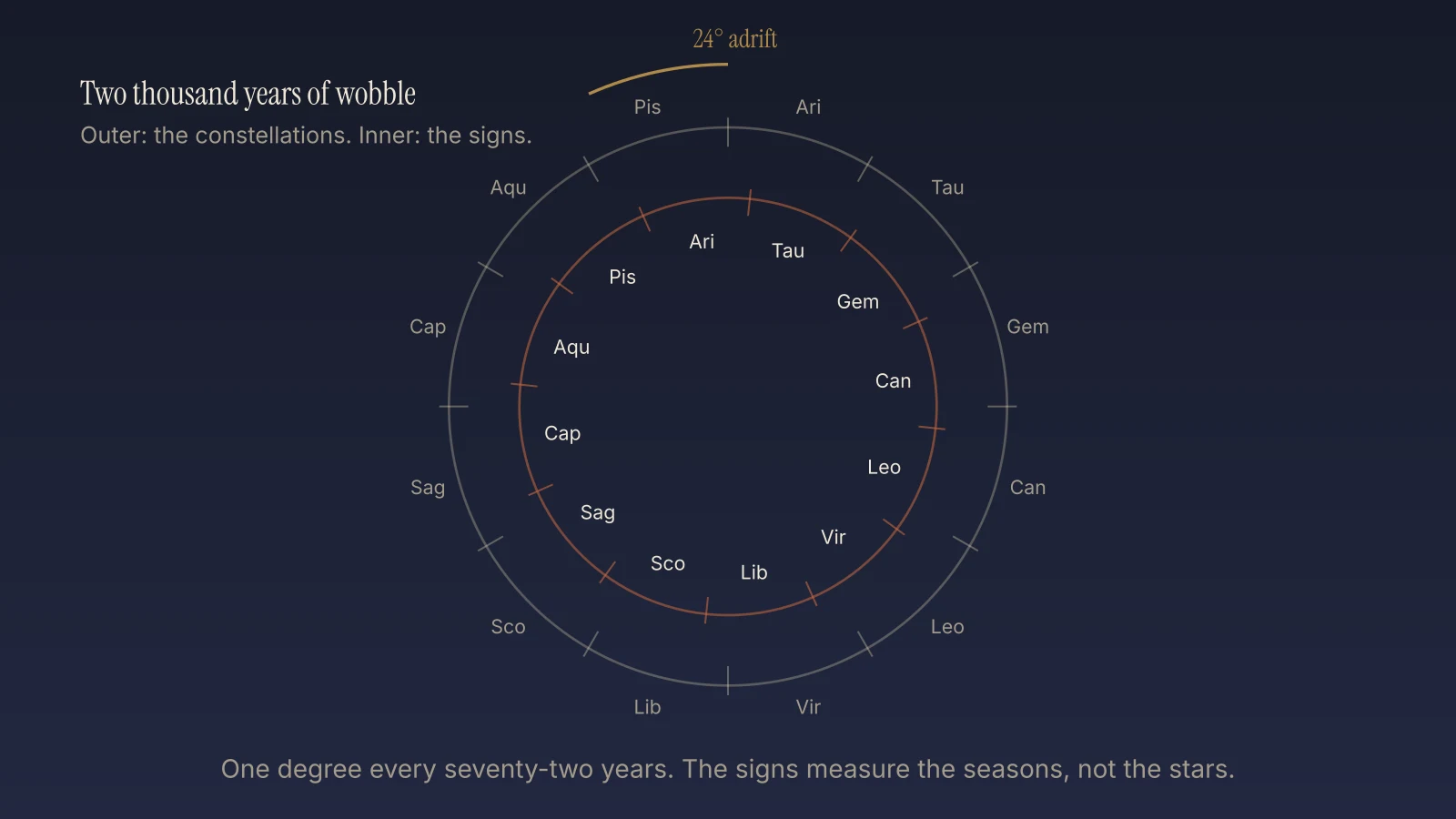
Why is your star sign not where the stars actually are?
If you are a Leo, the Sun was probably in front of Cancer when you were born. The zodiac has drifted about a sign away from the constellations it was named after, and most astrology uses the drifted version on purpose.
6 min read
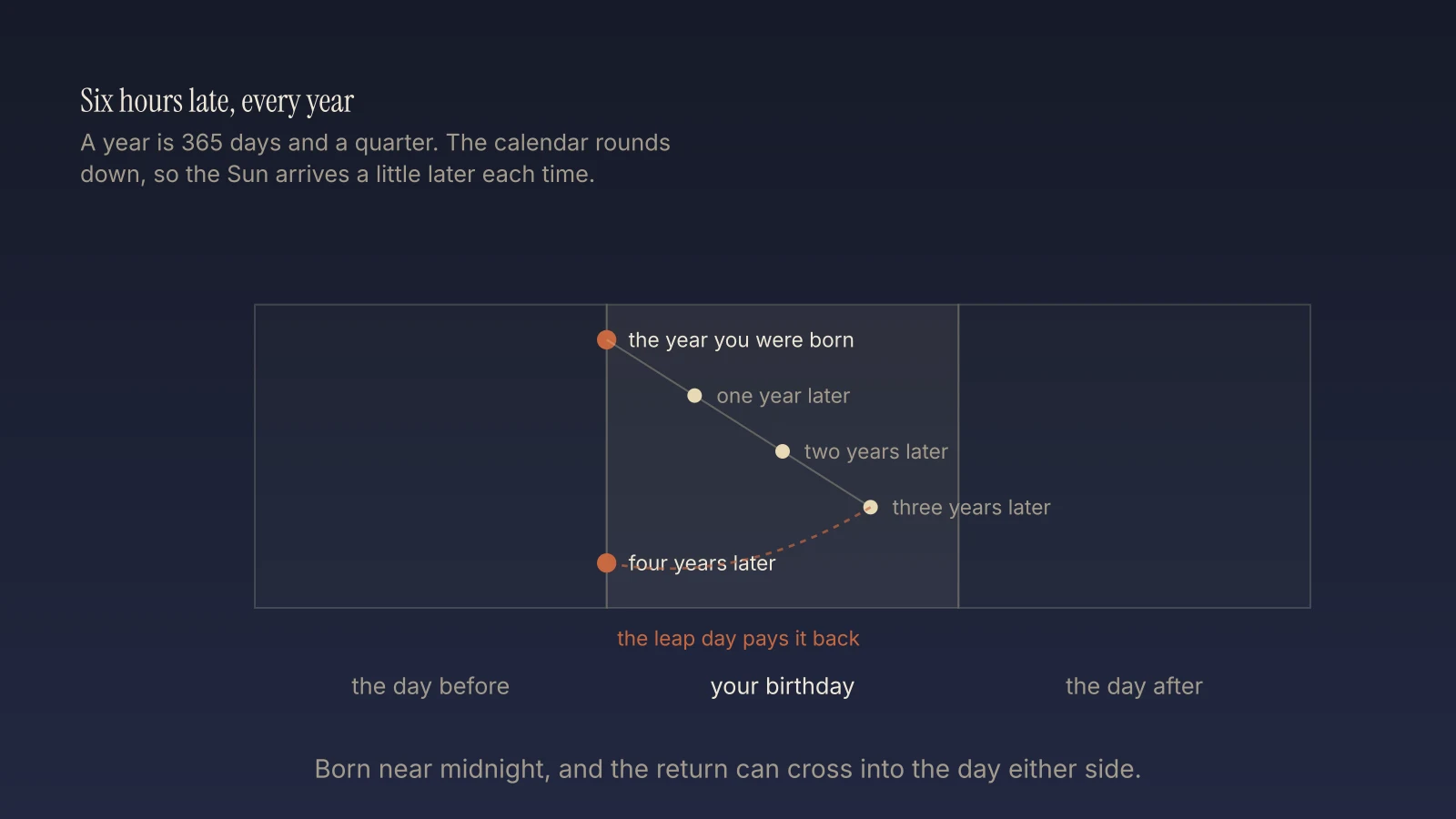
What is a solar return, and why is it not always your birthday?
It is the moment each year when the Sun comes back to the exact degree it held when you were born. That moment lands about six hours later each year, which is why it can fall a day either side of the date on your certificate.
4 min read
Try it on your own chart
Everything above is general. OrbHeaven does the same arithmetic against your own birth details and gives you the dates: when a stretch starts building, the day it is exact, when it eases.
About a minute. Birth time optional, and no account until after you have seen it.
Written by Kevin Blaxton. Not a professional astrologer, and says so — forty years of it as a hobby, twenty building software, and one strong opinion about apps that tell you your day is doomed. About