Reference · Astronomy
What is the tropical zodiac, and why are the signs not the constellations?
Kevin Blaxton — software builder; astrology student for 40+ years · figures computed by the OrbHeaven engine
Published · Last revised
The tropical zodiac measures the signs from the point where the Sun stands at the March equinox, so Aries always begins with spring in the northern hemisphere. It is tied to the seasons, not to the stars — which is why, after millennia of the Earth’s slow axial wobble, the signs no longer line up with the constellations they were named for.
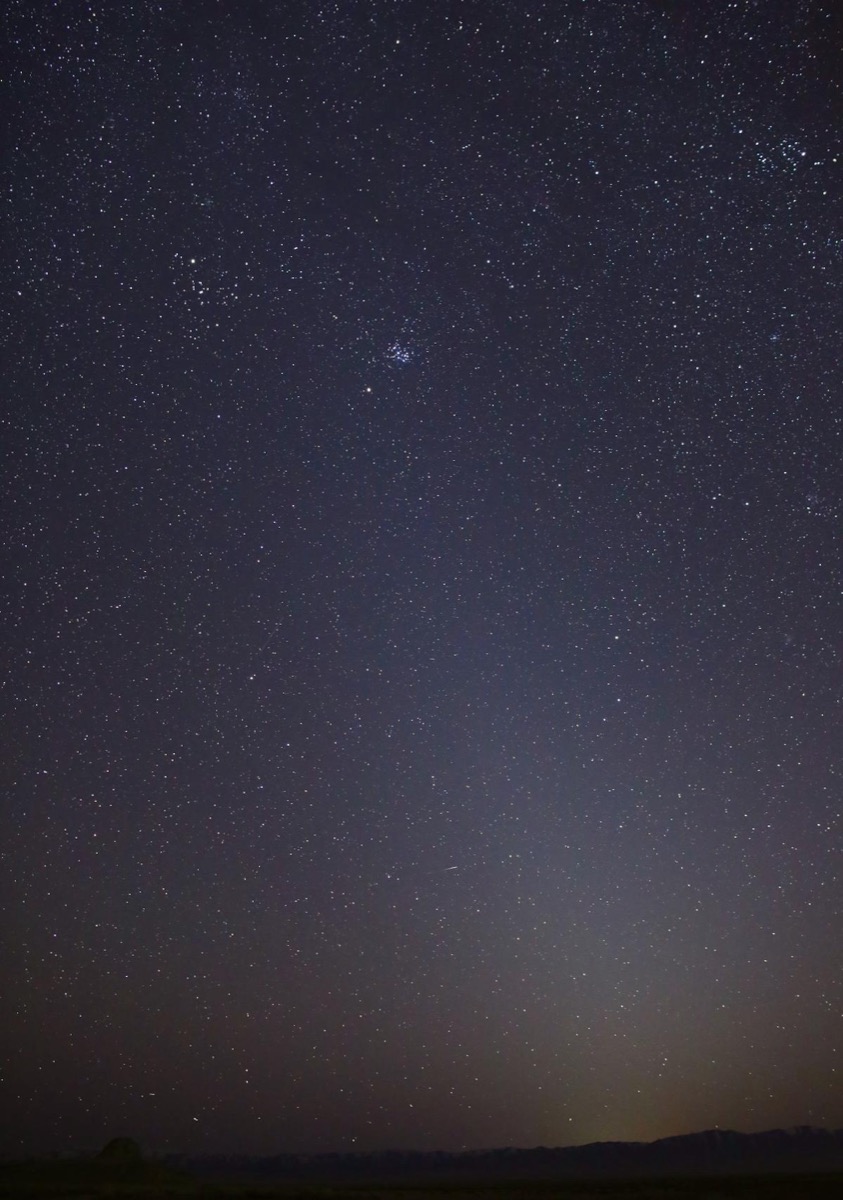
Source: NASA/JPL-Caltech · natural colour · U.S. public domain (courtesy NASA; no endorsement implied).
What is the tropical zodiac?
It divides the ecliptic — the Sun’s yearly path — into twelve equal 30° signs, starting from the March equinox point (0° Aries). Because that starting point is set by the seasons rather than by any star, the tropical zodiac is fixed to the solstices and equinoxes. It is the zodiac Western astrology uses, and the one OrbHeaven uses.
Each sign is exactly 30°, so the twelve are even. That evenness is the first thing that separates signs from constellations, which are of wildly unequal size along the ecliptic.
Signs are not the constellations
The signs were named, more than two thousand years ago, for the constellations behind them. They have since drifted apart. The Earth’s axis slowly wobbles — precession — dragging the equinox point backwards against the stars by about a degree every 72 years, so the tropical signs have slid roughly a whole sign from their namesake constellations.
There is also a thirteenth constellation on the ecliptic, Ophiuchus, which the zodiac never included — one more sign that the twelve are a human scheme laid on the sky, not a map of it. This is why your “star sign” usually sits in front of a different constellation from the one it is named for.
Astronomical constellations and astrological signs are different things, and conflating them is the single most common misunderstanding about the zodiac.
Tropical and sidereal: two zodiacs
Because the signs can be measured either from the equinox (tropical) or from the stars (sidereal), there are two zodiacs. The sidereal zodiac, used by most Indian astrologers, keeps its signs tied to fixed star positions; in its most common (Lahiri) version the two differ by just over 24° today. OrbHeaven uses the tropical zodiac and explains — but does not offer — the sidereal one.
The figure below places one Sun position in all three frames at once — tropical sign, sidereal sign, and the actual constellation — computed by the engine. A fuller treatment, with the history and the arithmetic, is in tropical and sidereal astrology.
Three yardsticks around 0° Aries
| Date | Tropical | Lahiri | Constellation |
|---|---|---|---|
| 10 Apr10 April | 20°37′ Aries | 26°24′ Pisces | Pisces |
| 1 Jul1 July | 9°40′ Cancer | 15°26′ Gemini | Gemini |
| 15 Sept15 September | 22°40′ Virgo | 28°26′ Leo | Leo |
| 10 Dec10 December | 18°26′ Sagittarius | 24°11′ Scorpio | Ophiuchus |
Strips on 1 July 2026 · Lahiri gap 24.23° · the shaded bar spans five sidereal systems’ starting points (22.78° to 25.11° from the equinox) · constellation boundaries: IAU, 1930
Precession: the drifting gap
The gap between the two zodiacs is not fixed — it grows. Precession moves the equinox point against the stars by about 50 arcseconds a year, roughly a degree every 72 years, so the tropical and sidereal zodiacs drift apart steadily. Two thousand years ago they nearly coincided; today they are about 24° apart.
The figure shows that gap widening across the centuries, computed from the engine’s precession model.
How the gap grew
| Sidereal system | Gap was zero | Gap in 2026 |
|---|---|---|
| Fagan/Bradley | 221 CE | 25.11° |
| Lahiri | 285 CE | 24.23° |
| Krishnamurti | 292 CE | 24.13° |
| Yukteshwar | 385 CE | 22.85° |
| Raman | 389 CE | 22.78° |
Swiss Ephemeris, five sidereal systems, sampled every 25 years · gap on 1 July · Lahiri checked against OrbHeaven’s engine · 50.3″ a year, one degree every 71.6 years
What the signs are read as
In the tradition, a sign describes the style of whatever planet sits in it — the same Mars pushes differently in Aries than in Pisces. The tropical signs carry those meanings tied to the seasonal cycle: Aries as spring’s first push, and so on around the year.
Where this is disputed
Which zodiac is “right” is a genuine, long-running disagreement between Western (tropical) and Indian (sidereal) astrology, and no calculation settles it — it depends on what you think a sign is measured from. The precession and the positions are exact and the same for everyone; which zodiac to read by is a tradition, and we say which one we use.
Common misconceptions
- Is my star sign the constellation the Sun was in?
- Usually not. Tropical signs are measured from the equinox, and precession has moved them about a sign from the constellations, so the Sun is typically in front of the previous constellation.
- Is the tropical zodiac wrong because it does not match the stars?
- No. It is measured from the seasons rather than the stars — a different, deliberate choice, not an error. The sidereal zodiac makes the opposite choice.
- Is Ophiuchus a missing thirteenth sign?
- The ecliptic does pass through Ophiuchus, but the zodiac is a twelve-fold seasonal scheme, not a list of constellations — so there is no “missing” sign to add.
References & further reading
- [1] International Astronomical Union — the 88 constellations and their boundaries (the ecliptic crosses thirteen).
- [2] Meeus, J., Astronomical Algorithms, 2nd ed. (Willmann-Bell, 1998) — precession and the equinox.
- [3] Urban, S. & Seidelmann, P. K. (eds.), Explanatory Supplement to the Astronomical Almanac — precession and reference frames.
Suggested citation
Blaxton, K. (2026). What is the tropical zodiac, and why are the signs not the constellations. OrbHeaven Reference. https://orbheaven.com/reference/the-tropical-zodiacRevision history
- First build. The tropical/sidereal/constellation “yardsticks” figure and the precession-gap figure are reused from OrbHeaven’s engine-computed blog figures (covered by lib/blog/tropical-sidereal tests); the signs-vs-constellations diagram is our own. Imagery: NASA/JPL-Caltech photograph of the zodiacal light — the ecliptic plane itself (U.S. public domain). Cross-links the existing tropical-vs-sidereal blog article, which is preserved.
Related glossary entries
About a minute. Birth time optional, and no account until after you have seen it.
More in the reference library
What is an aspect in astrology? The angles, the orbs, and the geometry
An aspect is the angle between two points in a chart. This is the geometry — the six angles astrologers use, what an orb is, and where the set comes from — with an interactive dial that classifies any separation using OrbHeaven’s engine.
What is the Ascendant, and why does your birth time decide it?
The rising sign is the degree of the zodiac climbing over the eastern horizon at your exact birth moment and place — explained with the celestial-sphere geometry, an engine-computed interactive, and why signs rise unevenly.
Why do planets seem to move backwards? Apparent retrograde motion
Planets never reverse. Retrograde motion is an illusion of perspective as Earth overtakes them — explained with orbital geometry, a worked example from our engine, and the history from Ptolemy to Kepler.