Reference · Astronomy
Why do planets seem to move backwards? Apparent retrograde motion
Kevin Blaxton — software builder; astrology student for 40+ years · figures computed by the OrbHeaven engine
Published · Last revised
No planet ever reverses. Apparent retrograde motion is an illusion of perspective: for a few weeks a planet appears to drift westward against the fixed stars, because the direction we must look to see it swings as Earth and the planet move along their orbits at different speeds. The planet’s own motion around the Sun never changes.
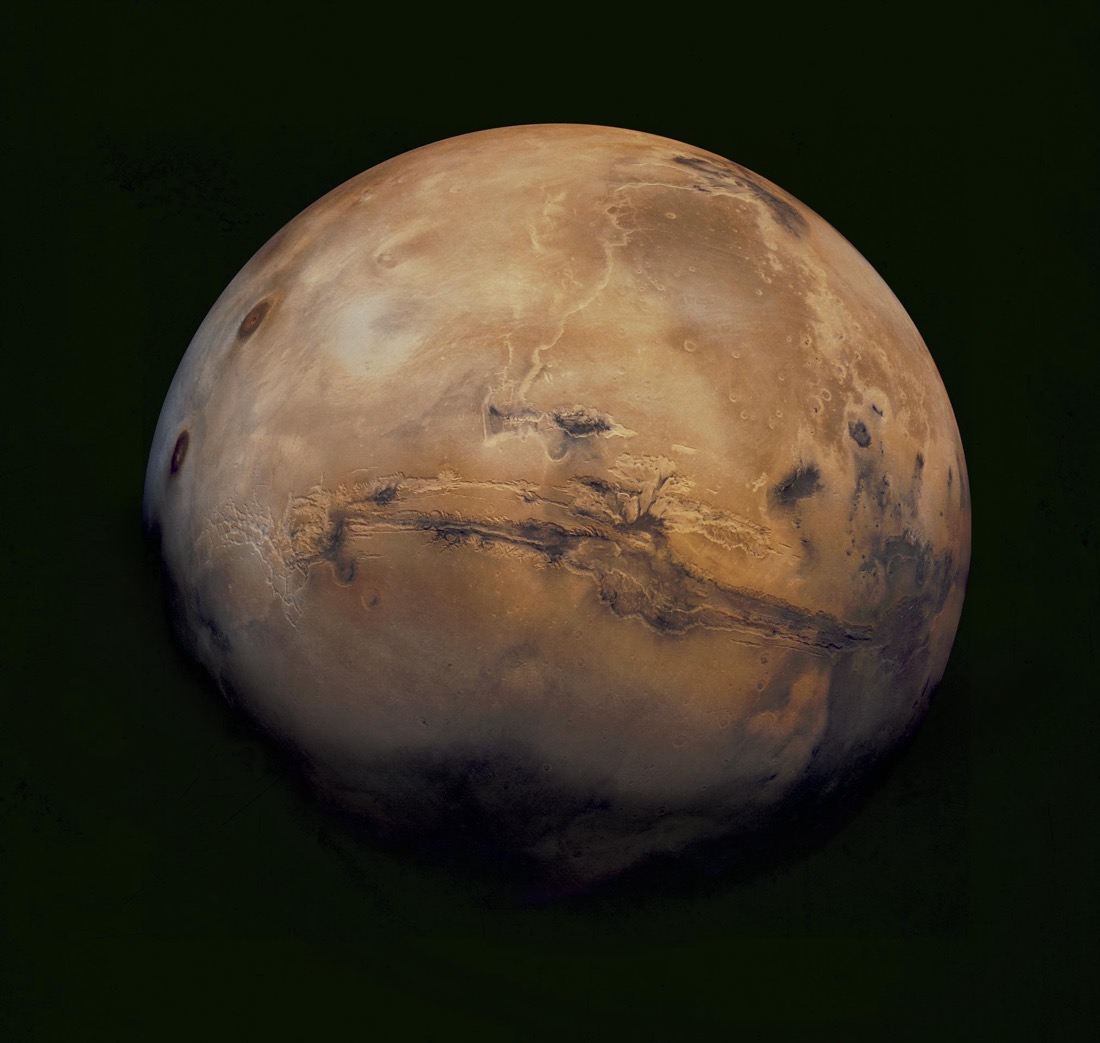
Source: NASA/USGS (Viking Orbiter) · approximately natural colour · U.S. public domain (courtesy NASA; no endorsement implied).
What is apparent retrograde motion?
Watched night after night, a planet normally creeps eastward through the zodiac. During a retrograde it slows, appears to stop — a moment called a station — tracks westward for days or weeks, stops again, and resumes eastward. Seen against the stars, the whole episode traces a loop or a flattened zig-zag.
The word “apparent” is doing the real work. Nothing about the planet’s orbit changes during a retrograde; what changes is our view of it from a moving Earth. When the motion resumes its usual eastward direction the planet is said to turn direct again.
Why does it only look like it is going backwards?
Earth takes a year to orbit the Sun; Mars takes 1.88 years, on a wider and slower track. As Earth catches and passes Mars, the direction we must look to see Mars swings backward against the far more distant stars — the way a car you overtake on a motorway seems to slide backward against the hills behind it.
The inner planets reverse the setup. Mercury and Venus orbit faster than Earth and inside its orbit, so they appear to go retrograde as they overtake us, passing between the Earth and the Sun.
Because it is a line-of-sight effect, the backward motion of an outer planet is strongest around opposition — the point where Earth passes between that planet and the Sun, and is closest to it.
Mars retrograde explorer
One slider · three synchronized viewsLooking down on the orbits — Earth (green) laps Mars (clay).
Apparent longitude over time — the marker is “now”.
- Date
- 15 Jan 2025
- Apparent longitude
- 26.4° Cancer
- Motion state
- retrograde (apparent)
Try: drag to Opposition and the state flips to retrograde as Earth passes Mars; step slowly across Turns direct to catch the stationary moment. Computed live by the OrbHeaven engine for the real 2024–25 retrograde.
Which planets go retrograde, and how often?
Every planet appears to; only the Sun and Moon never do. How often follows each planet’s synodic cycle — how long Earth takes to lap it, or to be lapped.
- Mercury
- Three or four times a year, for about three weeks each — the retrogrades everyone has heard of.
- Venus
- About every nineteen months, for roughly six weeks.
- Mars
- About every twenty-six months, for two to three months. The worked example below is the Mars retrograde of winter 2024–25.
- Jupiter to Pluto
- Once in each cycle of opposition — a little over a year apart for Jupiter and Saturn, closing toward once a year for the outermost — for months at a time. The farther out the planet, the larger the share of each cycle it spends retrograde.
What does a real retrograde look like, computed?
Take a real episode. Between its stations in December 2024 and February 2025, Mars tracked backwards through the zodiac for about eighty days, reaching opposition in the middle. The figure below is that motion, computed by OrbHeaven’s own engine: apparent ecliptic longitude against time, with the backward stretch shaded and the two stations marked.
The engine here is the same one the birth charts use. Positions are geocentric and tropical (the true equinox of date), times are UTC, and the lunar node is the mean node; modern ephemerides agree on the planets to well within the minute shown.
Every computed figure on this page — the orbit view, the sky path and this graph — is recomputed from the engine by an automated test, so the picture can never drift from the calculation.
A puzzle astronomers chased for two thousand years
Those backward loops were the central problem of ancient astronomy. Babylonian astronomers predicted them arithmetically; Greek astronomy, in Ptolemy’s Almagest (2nd century CE), reproduced them inside an Earth-centred cosmos using circles upon circles — epicycles — a model accurate enough to stand for some fourteen hundred years.
A Sun-centred alternative had been proposed in antiquity by Aristarchus of Samos, but it did not take hold. When Copernicus revived heliocentrism in De revolutionibus (1543), retrograde motion fell out of the arrangement naturally, as the line-of-sight effect described above. It is worth being exact about what he did and did not do: Copernicus still assumed uniform circular motion and kept small epicycles, so his system was not in fact simpler, nor more accurate, than Ptolemy’s.
Accuracy came later. Johannes Kepler, in Astronomia Nova (1609), abandoned the circles for ellipses — his first two laws of planetary motion — and it was that, not heliocentrism alone, that finally fitted the observations, Mars most of all. The ellipses sharpened the predictions; the explanation of retrograde is the heliocentric geometry itself. Galileo’s telescope (from 1610) added physical evidence, and Newton (1687) supplied the gravitational cause.
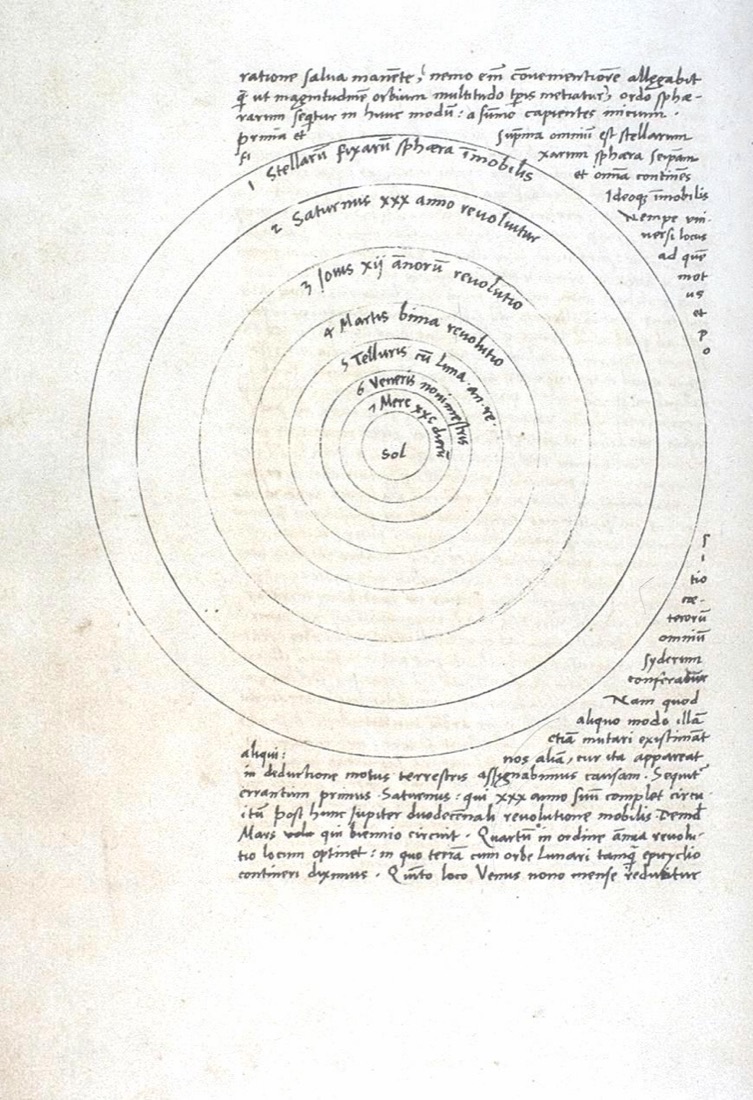
Source: Nicolaus Copernicus, De revolutionibus (manuscript, c. 1543) · historical diagram · public domain.
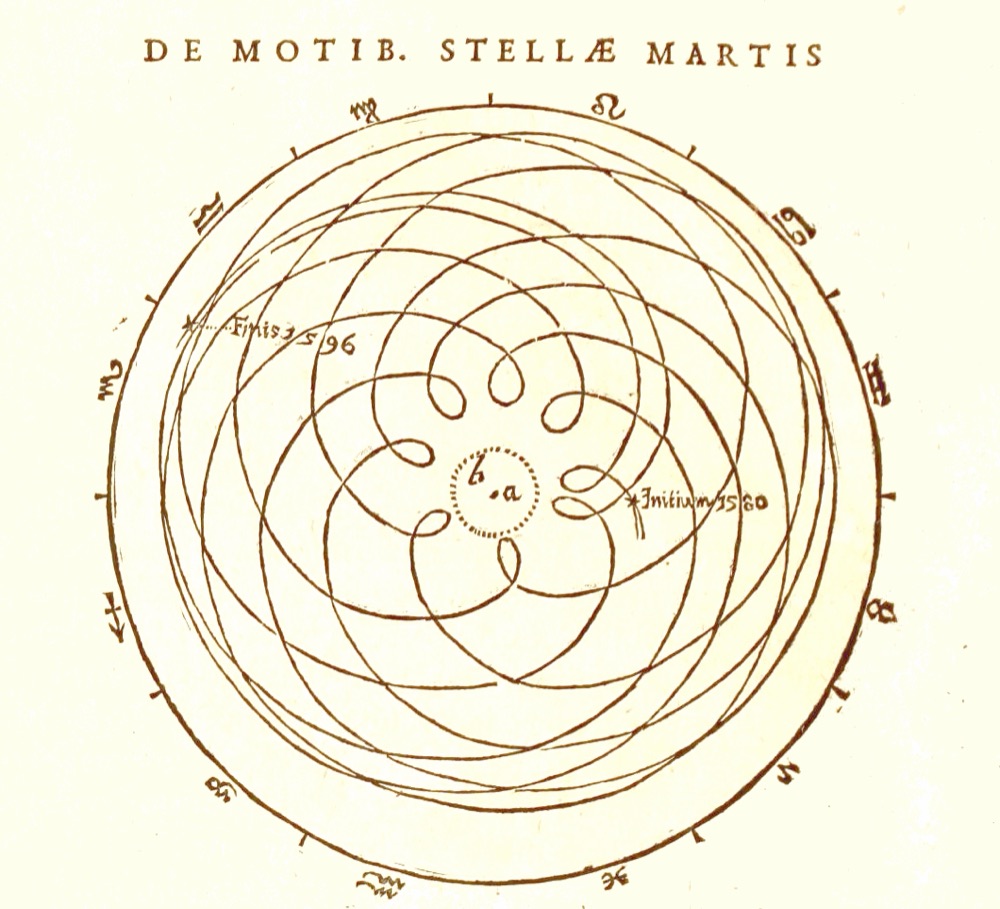
Source: Johannes Kepler, Astronomia Nova (1609) · historical diagram · public domain.
What does retrograde mean in astrology?
Here the register changes from fact to interpretation. In the astrological tradition a retrograde planet is read as turned inward — reviewing and revisiting rather than acting outright. Mercury’s retrogrades are the famous ones, read as a time to re-check communication, travel and agreements, and are felt most in a transit to your own chart.
Where this is disputed
How much weight a retrograde carries, and whether it is cautionary or merely reflective, varies by school; some barely mark it. The astronomy above is settled and the same for everyone; the meaning is a tradition, and we keep the two apart.
Common misconceptions
- Does the planet actually stop or reverse?
- No. Only its apparent direction as seen from the moving Earth changes. The planet continues forward along its orbit the whole time.
- Did Copernicus explain retrograde by making the model simpler?
- Not quite. His Sun-centred model explained retrograde elegantly, but he kept circular orbits and epicycles, so it was not simpler or more accurate than Ptolemy’s. Kepler’s ellipses, decades later, delivered the accuracy.
- Does Mercury retrograde disrupt technology?
- There is no physical mechanism linking the two. That is an astrological interpretation, not a claim about the sky.
References & further reading
- [1] NASA Science — Mars (planetary overview and apparent motion).
- [2] NASA / JPL — Solar System Dynamics, HORIZONS ephemeris system.
- [3] Ptolemy, Almagest (c. 150 CE) — the geocentric epicyclic model of planetary motion.
- [4] Copernicus, N., De revolutionibus orbium coelestium (1543).
- [5] Kepler, J., Astronomia Nova (1609) — the first two laws of planetary motion.
- [6] Meeus, J., Astronomical Algorithms, 2nd ed. (Willmann-Bell, 1998) — apparent geocentric motion and stations.
Suggested citation
Blaxton, K. (2026). Why do planets seem to move backwards? Apparent retrograde motion. OrbHeaven Reference. https://orbheaven.com/reference/retrograde-motionRevision history
- First publication. Orbit, sky-path and longitude figures and the interactive are computed by the OrbHeaven engine (astronomy-engine), using the real 2024–25 Mars retrograde; each is re-derived by an automated test. Imagery: NASA/USGS Viking Mars (U.S. public domain) and public-domain historical diagrams by Copernicus and Kepler.
- Editorial and scientific audit: sharpened the outer-planet retrograde cadence (Jupiter and Saturn recur a little over a year apart, not exactly yearly), corrected the NASA Mars reference URL, re-verified every reference and image-source link resolves, and added a table of contents and figure navigation.
Related glossary entries
About a minute. Birth time optional, and no account until after you have seen it.
More in the reference library
What is the Ascendant, and why does your birth time decide it?
The rising sign is the degree of the zodiac climbing over the eastern horizon at your exact birth moment and place — explained with the celestial-sphere geometry, an engine-computed interactive, and why signs rise unevenly.
What is an aspect in astrology? The angles, the orbs, and the geometry
An aspect is the angle between two points in a chart. This is the geometry — the six angles astrologers use, what an orb is, and where the set comes from — with an interactive dial that classifies any separation using OrbHeaven’s engine.
What is the tropical zodiac, and why are the signs not the constellations?
The tropical zodiac measures the signs from the March equinox, not from the stars — which is why, after millennia of precession, the signs no longer line up with their constellations. With engine-computed tropical/sidereal/constellation comparisons.
What is a house system, and why is there more than one?
A house system is the rule for dividing the sky into the twelve houses. Every system shares the four angles; they differ only in the cusps between. This compares Placidus, whole-sign and equal from the engine — and explains why no calculation settles which is right.
What are the lunar nodes, and why do eclipses happen there?
The lunar nodes are the two points where the Moon’s tilted orbit crosses the Sun’s path. Eclipses can only happen near them. This covers the geometry, mean versus true node, the history (Rahu and Ketu), and what the tradition reads into them.
What is a birth chart, and how is one built?
A birth chart is a map of the sky at the moment and place you were born. This explains how one is assembled — the frame, the signs, the planets, the houses and aspects — reusing OrbHeaven’s engine, and where calculation ends and interpretation begins.
What are your Sun, Moon and rising signs — the “big three”?
The Sun, Moon and rising sign are the three placements most astrologers start with. This explains what each one is astronomically — the Sun’s apparent position, the Moon’s actual position, the geometric Ascendant — how much birth information each needs, and what the tradition reads into them.
What are the twelve signs of the zodiac?
The twelve signs are equal 30° slices of the ecliptic, sorted by four elements and three modalities. This explains the structure, how a sign is determined, why the signs are not the constellations they are named for, and what the tradition reads into them.
What are the twelve houses in astrology?
The houses are the twelve areas of life a chart is read through, drawn from the horizon at your birth. This covers the astronomical geometry, the twelve house topics, and how placement depends on birth time, place and the house system.
What is a transit in astrology?
A transit is a planet’s ongoing motion meeting a point in your fixed birth chart. This explains how current positions are calculated, how a transit builds to exact and fades, and keeps the astronomy separate from the astrological reading.
What do the degrees in a birth chart mean?
Every position in a chart is an angle. This explains the 360° circle, the twelve 30° signs, how a sign-and-degree equals an absolute ecliptic longitude, and how degrees drive aspects — keeping the arithmetic separate from interpretation.
What is an orb in astrology?
An orb is how far an aspect is from exact — and how far from exact still counts. This explains the arithmetic, OrbHeaven’s orb table and the luminary rule, with an interactive dial, and that orbs are a convention of practice, not a scientific threshold.
What is the Midheaven (MC) in astrology?
The Midheaven is where the ecliptic crosses the upper meridian — not the zenith, and not the ecliptic’s highest point. This covers the celestial-sphere geometry, an engine-computed example, its relationship to the house systems, and the traditional reading.
What are the four elements in astrology?
Fire, earth, air and water are a traditional way of sorting the twelve signs into four groups of three — a classification of temperament, not a physical property of the signs. This explains the groupings, their classical qualities, where the scheme came from, and why it is not the chemistry of the same name.
What are the three modalities in astrology?
Cardinal, fixed and mutable are a traditional way of sorting the twelve signs into three groups of four by how they act — start, hold, adapt. This explains the groupings, their tie to the seasons, how they combine with the four elements to make the twelve signs, and why they are a classification rather than a tested personality typology.
What is a planetary station?
A station is the instant a planet’s apparent motion along the zodiac changes direction — stationary retrograde when it turns backward, stationary direct when it turns forward. With an engine-computed graph of the exact turning points and a worked example.
What is a new Moon?
A new Moon is the instant the Sun and Moon share the same ecliptic longitude — a conjunction, with the Moon between Earth and Sun and its lit side turned away. This explains the geometry, distinguishes the exact instant from the visible crescent, works a real example from the engine, and shows why most new Moons are not solar eclipses.
What is a full Moon?
A full Moon is the instant the Sun and Moon reach about 180° apart in ecliptic longitude — an opposition, the Earth between them and the near side fully lit. With the geometry, a worked example from the engine, and why most full Moons are not lunar eclipses.
What is the chart ruler?
The chart ruler is the planet that rules the sign on the Ascendant: find the rising sign, then read off its ruler. Covers the traditional and modern schemes (which differ for Scorpio, Aquarius and Pisces) and how an uncertain birth time can change the ruler.
What is a stellium?
A stellium is a concentration of several planets — usually three or more — in one sign or one house of a chart. This explains the competing definitions, shows one on a chart wheel, separates the measured positions from the interpretive label, and explains how a sign-based and a house-based stellium can differ.
What is a conjunction?
A conjunction is two planets at nearly the same degree of the zodiac — an aspect of 0°. This explains the geometry, how OrbHeaven counts it within an 8° orb, what the tradition reads into it, and where the idea comes from.
What is an opposition?
An opposition is two planets 180° apart, facing each other across the chart. This explains the geometry, how OrbHeaven counts it within an 8° orb, what the tradition reads into it, and where it comes from.
What is a square in astrology?
A square is two planets 90° apart — a quarter of the circle, three signs apart, in signs of the same modality. This explains the geometry, how OrbHeaven counts it within a 7° orb, what the tradition reads into it, and where it comes from.
What is a trine?
A trine is two planets 120° apart — a third of the circle, four signs apart, usually in signs of the same element. This explains the geometry, how OrbHeaven counts it within a 7° orb, what the tradition reads into it, and where it comes from.
What is a sextile?
A sextile is two planets 60° apart — a sixth of the circle, two signs apart, usually in compatible elements. This explains the geometry, why OrbHeaven gives it a tighter 5° orb, what the tradition reads into it, and where it comes from.
What is a quincunx?
A quincunx — or inconjunct — is two planets 150° apart, in signs that share neither element nor mode. This explains the geometry, why it is not one of Ptolemy’s aspects, the tight orb OrbHeaven gives it, and what the tradition reads into it.
What is a grand trine?
A grand trine is three planets each 120° from the other two — an equilateral triangle of three trines, usually in one element. This explains the geometry, which configurations qualify, a worked example, and what the tradition reads into it.
What is a T-square?
A T-square is two planets in opposition that both square a third — the apex. This explains the geometry, which configurations qualify, a worked example, and what the tradition reads into the apex planet.
What is a grand cross?
A grand cross is four planets in two oppositions that square each other — four squares and two oppositions, usually in one modality. This explains the geometry, which configurations qualify, a worked example, and what the tradition reads into it.
What is a yod?
A yod is two planets in sextile that both make a quincunx to a third — the apex. This explains the geometry, which configurations qualify, a worked example, the genuine dispute over its meaning, and its history.
What is a kite?
A kite is a grand trine with a fourth planet opposite one of its points and sextile the other two. This explains the geometry, which configurations qualify, a worked example, and what the tradition reads into the opposing planet.
What is a house cusp?
A house cusp is the boundary between two houses — a degree of the zodiac. This explains what a cusp is, how the house system and the birth time set it, why cusps move, and how a planet near a cusp is read.
What can a chart show without a birth time?
Without a birth time, a chart shows only what holds across the whole day — planets by sign, most aspects — while the Ascendant, Midheaven and houses cannot be found at all. This explains why, and how OrbHeaven shows the uncertainty.
What is the Descendant?
The Descendant is the degree of the zodiac setting in the west at birth — exactly opposite the Ascendant, and the 7th-house cusp in quadrant charts. This explains the geometry, how it is found, and what the tradition reads into it.
What is the Imum Coeli?
The Imum Coeli, or IC, is the point of the zodiac opposite the Midheaven — the lower meeting of the ecliptic and the meridian, and the 4th-house cusp in quadrant charts. This explains the geometry, how it is found, and what it means.
What is an applying aspect?
An applying aspect is one still forming — the faster planet moving toward the exact angle, so the gap is closing. This explains how it is told from a separating aspect, how OrbHeaven computes it, and what the tradition reads into it.
What is a separating aspect?
A separating aspect is one already past exact — the faster planet moving away, so the gap is widening. This explains how it is told from an applying aspect, how OrbHeaven computes it, and what the tradition reads into it.
What is direct motion?
Direct motion is a planet’s ordinary forward motion through the zodiac — what it does most of the time. This explains the astronomy, how OrbHeaven tells it from retrograde, and what the tradition reads into a planet stationing direct.
What is an ingress?
An ingress is the instant a body’s apparent ecliptic longitude crosses a zodiac-sign boundary — a multiple of 30°. This explains the geometry, shows a verified example from the engine, and gives the rates for each body and what the tradition reads into an ingress.
What is a lunation?
A lunation is the Moon’s synodic cycle — the roughly 29.5-day round from New Moon to New Moon, through the phases as the Sun–Moon elongation and the lit fraction change. This explains the astronomy, shows the phases, and separates them from the tradition.
What is the waxing Moon?
The waxing Moon is the half of the lunar cycle from New to Full, when the lit part of the disc grows each night. This explains the astronomy — the rising elongation and illuminated fraction — and separates it from the traditional reading.
What is the waning Moon?
The waning Moon is the half of the lunar cycle from Full back to New, when the lit part of the disc shrinks each night. This explains the astronomy — the falling illuminated fraction — and separates it from the traditional reading.
What is the void-of-course Moon?
The void-of-course Moon is the stretch after the Moon’s last exact aspect in a sign until it enters the next. The definition depends on which aspects and bodies count — a convention, not an astronomical event. This sets out the competing definitions without picking one as settled.
What are planetary hours?
Planetary hours divide daylight into twelve unequal hours and the night into twelve more, each ruled by one of the seven classical planets in the Chaldean order. This explains the scheme and its history — and that it is a timekeeping tradition, not a physical influence.
What is a solar return?
A solar return is the instant each year when the Sun comes back to the exact apparent ecliptic longitude it held at birth — the birthday by the sky, which rarely lands on the calendar date. This works an example from the engine and documents the birth-time sensitivity.